
The smash is padel's most spectacular shot — and the most punishing on your body when trained incorrectly. Burned-out rotator cuffs, chronic elbow pain, and wrecked lower backs are the price players pay for hammering overheads at full power without proper technique or a sensible training progression. This guide tells you exactly how to train it the smart way.
Why the smash causes more injuries than players realize
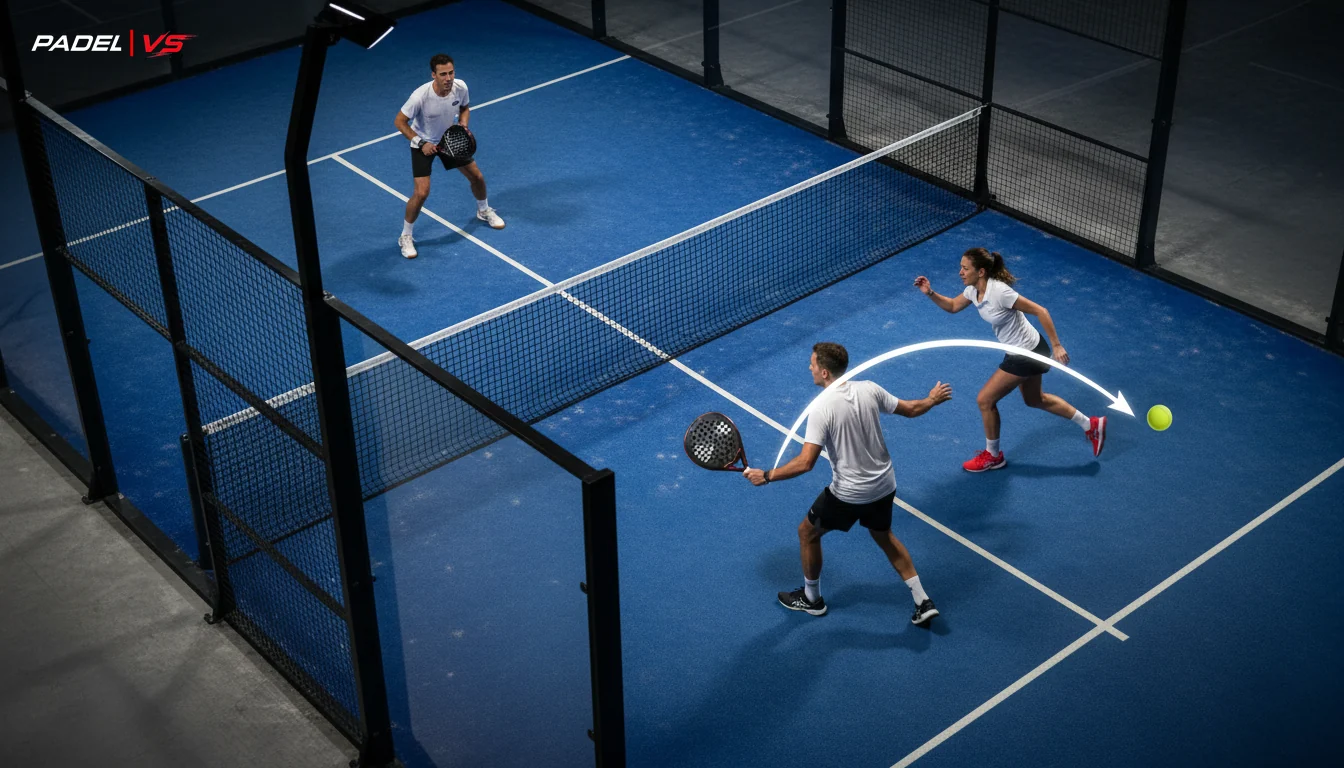
Padel is played on a 20 × 10 meter court enclosed by glass walls and metal fencing. That changes everything: in tennis, you can hit a flat overhead and move on, but in padel, your opponent can retrieve the ball off the back glass — which means you need smashes with spin, angle, or precisely directed power. That extra technical demand forces the body into explosive, repetitive movements that most players never properly prepare for.
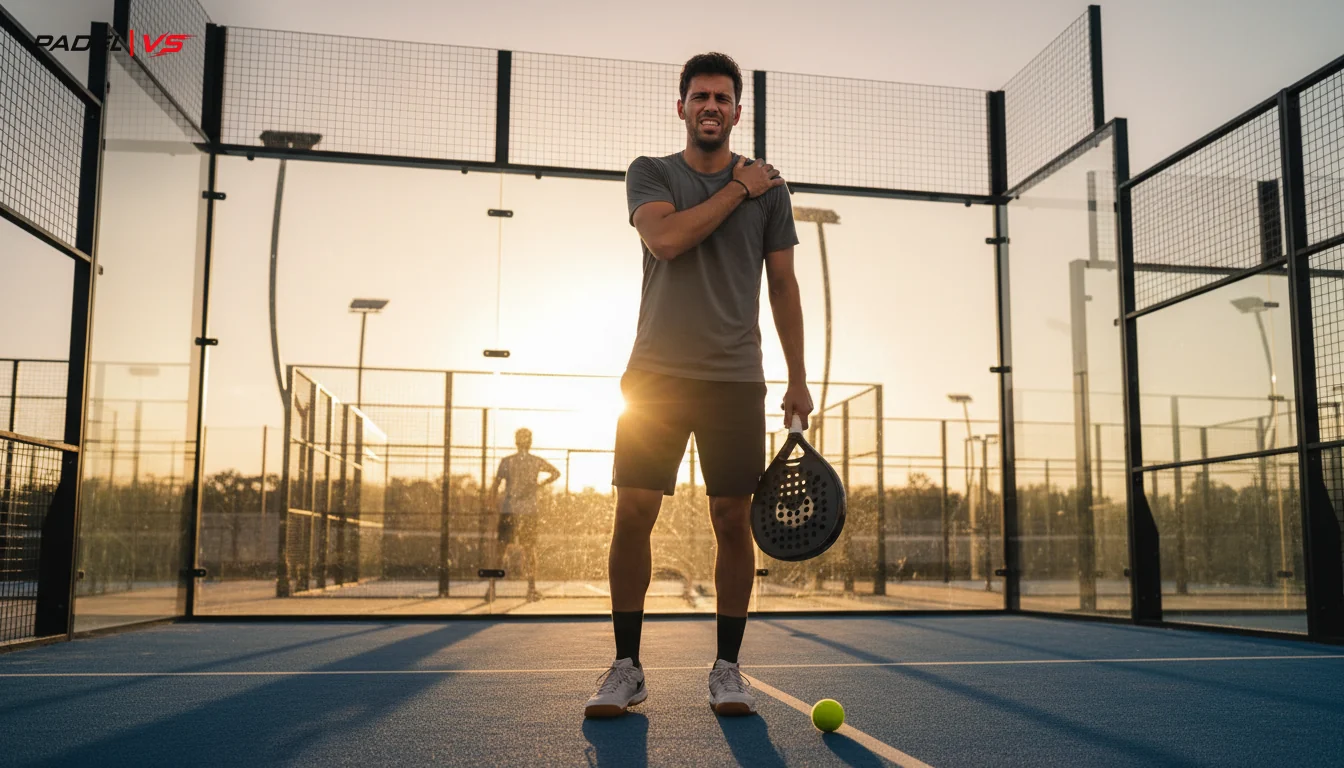
The most commonly affected structures are the rotator cuff (four muscles that stabilize the shoulder joint), the distal biceps tendon, the ulnar nerve at the elbow, and the lumbar paraspinal muscles. Biomechanically, a full-power overhead smash can generate internal shoulder rotation forces exceeding 6,000 N·cm — comparable to what's recorded in baseball pitchers. You don't need to be a professional padel player to get hurt: accumulated volume with poor mechanics at the Cuarta or Tercera level is equally dangerous.
"The smash isn't trained by repeating smashes. It's built layer by layer: mobility, activation, partial technique — and only then, power."
The four smash variants you need to understand (and their injury risk)
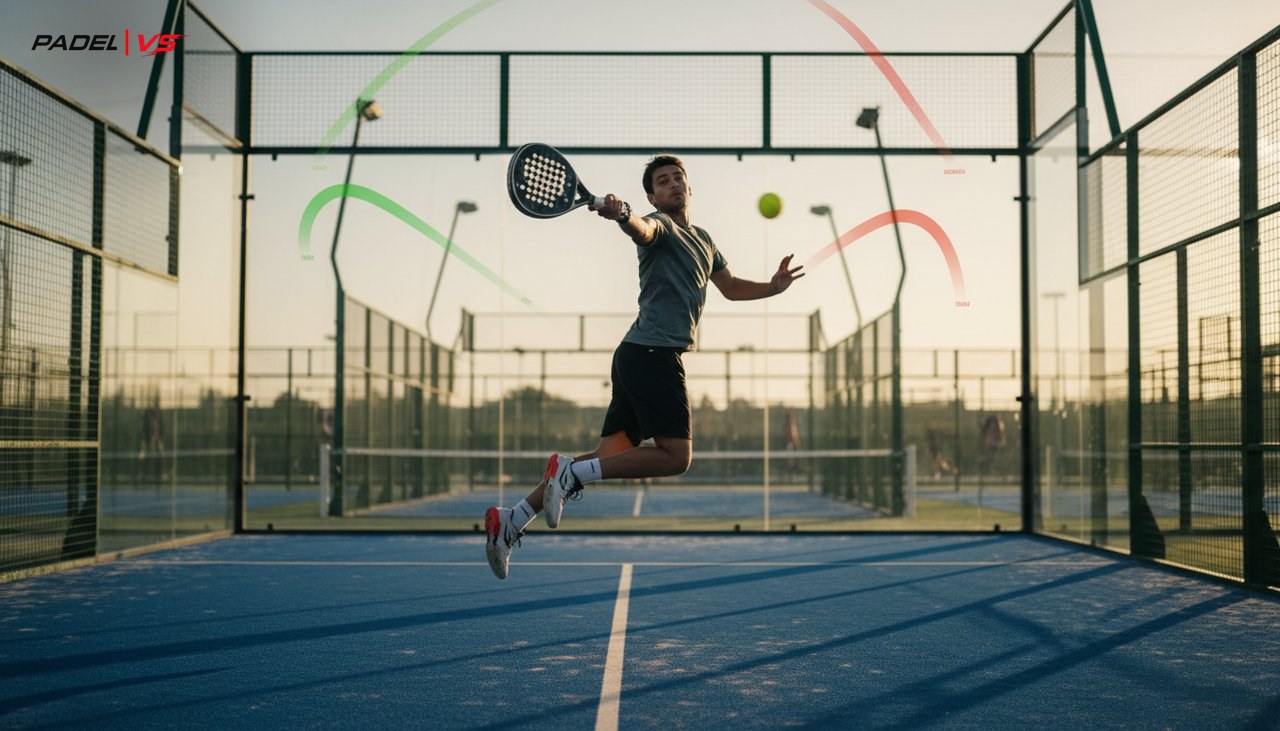
Before we talk training, identify which shot you're actually trying to develop. The bandeja and the smash por tres are completely different demands on your body:
| Shot | Description | Injury Risk | Minimum Recommended Level |
|---|---|---|---|
| Bandeja | Controlled overhead with side spin, soft descending trajectory keeping the ball low after bounce | Low | Cuarta (850-1000 ELO) |
| Flat smash | Direct overhead without spin, for clear put-away situations | Medium | Cuarta-Tercera |
| Víbora / Scissors | Heavy lateral spin overhead, ball exits to the side of the court | Medium-high | Tercera (1000-1180 ELO) |
| Smash por tres | Opponent retrieves from the back glass; you finish with maximum power directing the ball out of bounds | High | Segunda-Primera (1180+ ELO) |
If you're at the Quinta level (below 850 ELO in PADEL VS), your objective is the bandeja and the flat smash. Attempting the smash por tres without technical foundation is the fastest route to the physio table.
The warm-up routine most players skip entirely

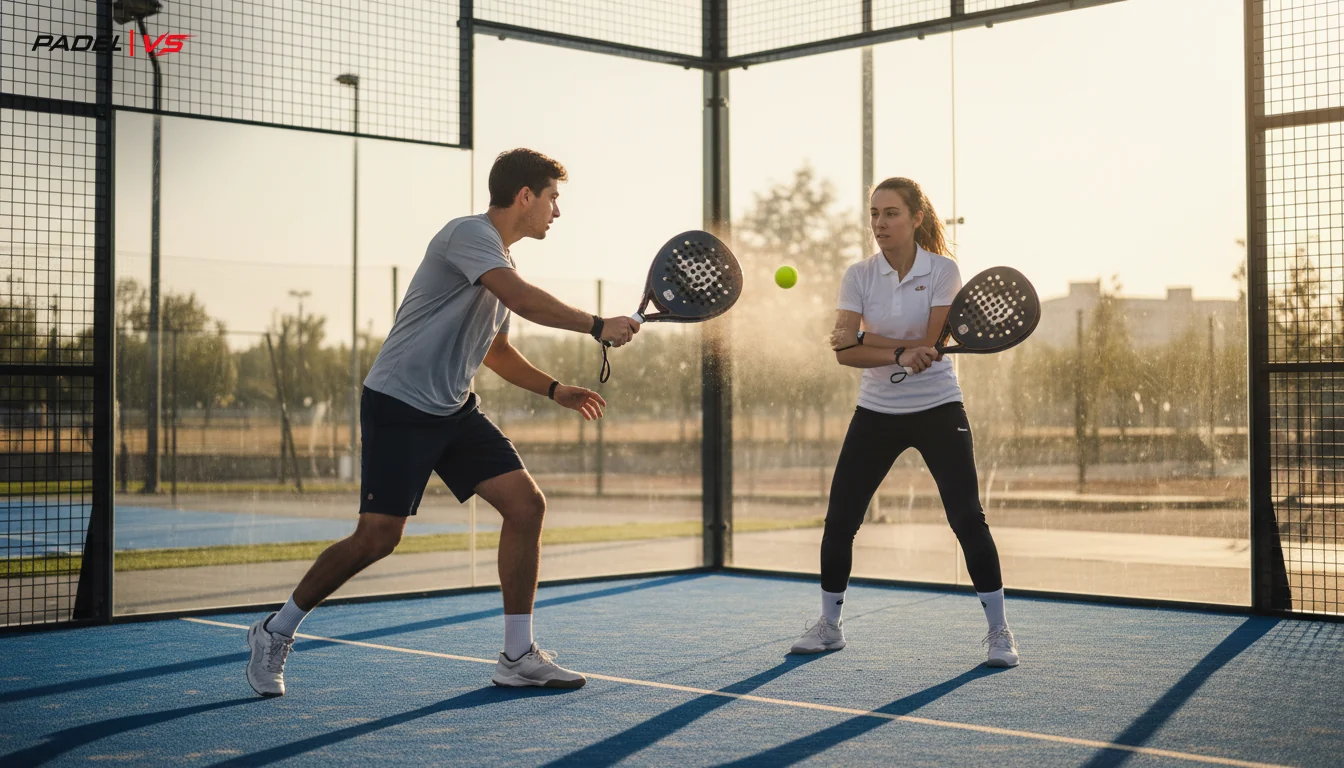
Walking onto the court and launching overheads within two minutes is the number one mistake. Connective tissue in the shoulder needs at least 8-10 minutes of specific preparation before explosive work. This protocol works:
1. Thoracic spine mobility (2 minutes)
Use a foam roller or the edge of a bench to perform controlled thoracic extensions. A stiff thoracic spine forces the shoulder to compensate — and that's where rotator cuff tears begin. Perform 10 slow repetitions, looking for range of motion, not speed.
2. External rotations with resistance band (2 minutes)
Attach a band to the court fencing (padel courts have metal mesh that's perfect for this). Elbow at 90°, arm against your side. Rotate outward against band resistance. 3 sets of 15 reps at about 40% of your maximum effort. This activates the infraspinatus and teres minor — the muscles that take the most abuse during the overhead swing.
3. Serratus anterior activation (1 minute)
Do push-up plus against the glass wall: at the top of the push-up, push the shoulder blade outward in an extra protraction. Without an active serratus anterior, the scapula doesn't rotate properly and the acromion pinches the rotator cuff on every smash. 2 sets of 10 reps.
4. Progressive shadow swings (5 minutes)
Start by tossing a ball up and simulating the swing with just your hand — no racket. Then with racket at 30% effort, then 50%, then 70%. Never swing at 100% in the first 20 minutes of any session.
Technical progression: from static to wall play
The most common mistake is always training the smash in live game situations (partner lobs, smashes while moving). That has its place for transfer to match play, but not for building clean technique. Use this structured progression instead:
Phase 1: Static shadow swing without ball
Work the full swing in front of a mirror or record yourself with your phone. Critical checkpoints: elbow at shoulder height at the start of the downswing, forearm pronation at contact, full arm extension before deceleration. Spend 5-10 minutes per session on this for the first two weeks if you're learning the shot.
Phase 2: Suspended ball or balloon
Hang a ball from a string at the correct contact height (slightly in front of your head and 20-30 cm above your maximum reach). Strike with control, no jumping yet. This locks in your contact point without the unpredictability of a real lob.
Phase 3: Controlled lob from the net
Your partner feeds precise, short, predictable lobs from the net position. You execute from a static stance. Start at 60% power. The goal is to land the ball in the court consistently — not to power it past anyone.
Phase 4: Real lob from game position
Now your partner feeds from the back, varying depth and height. You introduce lateral movement and the jump. Lumbar load increases dramatically here — pay close attention to not hyperextending your lower back when landing.
Phase 5: Smash por tres off the back glass
Only for Segunda and Primera players (1180-1550 ELO). The ball comes off the back glass with spin and variable height. You need a finely tuned reaction time and a solid foundation of eccentric shoulder strength before doing this repeatedly in training.
Training volume: how many smashes is too many
This is the question nobody asks, and the answer matters enormously. In racket sports, cumulative workload is a key injury risk factor. Research on junior tennis players has shown that exceeding 400 overhead strokes per week without prior progression quadruples shoulder injury risk. In padel the smash occurs less frequently than in tennis, but the per-shot intensity is comparable.
A practical guide by level:
- Quinta / Cuarta: Maximum 40-60 technical smashes per session, 2-3 times per week. Not all at full power.
- Tercera: Up to 80-100 smashes per session if technique is clean. Alternate power-focused sessions with control-focused sessions.
- Segunda / Primera / Open: Volume managed by your coach. Competition training may involve 150+ overhead contacts per session, but always with periodization and compensatory work built in.
Off-court work that multiplies your smash (and protects your shoulder)
You improve your smash by doing things other than just hitting smashes. These gym exercises have direct transfer and serious preventive value:
Face pulls with cable or band
Anchor the band at eye height. Pull toward your face with elbows high. Targets external rotators and scapular retractors. 3 × 15, twice a week. This is probably the single most important preventive exercise for any padel player who hits overheads regularly.
Pallof press
Anti-rotation core work. The smash generates massive trunk rotation; if your core can't control it, your lumbar spine absorbs the impact. 3 × 12 each side.
Low-cable rows
Balance your pushing work (smash) with pulling work. The ideal push-to-pull ratio for padel players is roughly 1:2. Many players train smashs constantly and never row — the result is muscular imbalance and chronic rotator cuff issues.
Squats and deadlifts
The smash starts in your legs. Power travels up from the ground, through your hips and trunk, and arrives at the shoulder. A player with weak legs compensates at the shoulder — more load, more risk. Two lower-body sessions per week will do more for your smash than a thousand poorly executed overheads.
"Padel is played with the whole body. The smash is practiced on the court, but it's built in the gym."
Warning signs: when to stop
Many players push through pain because "it's not that bad." Learn to distinguish normal muscular fatigue from real injury signals:
- Stop immediately if: you feel sharp or stabbing shoulder pain during the swing, you experience sudden loss of strength, or you hear a pop followed by pain.
- Reduce intensity if: pain appears at the end of a session and disappears within 30 minutes, you have morning shoulder stiffness lasting more than 3 consecutive days, or pain radiates toward the neck or down the arm.
- See a sports physiotherapist if any of the above persists for more than one week. Don't let it become a chronic issue that keeps you off the court for months.
Tracking your progress in PADEL VS
In PADEL VS we record your matches and update your ELO in real time. That lets you do something most players never do: correlate your technical training sessions with actual match results. If you spend three weeks working specifically on your bandeja in separate training sessions and your ELO in Tercera climbs, the method is working. If your ELO goes up but shoulder discomfort increases, that's a clear sign you're pushing volume too hard.
To access your player profile and stats, open app.padelvs.com / padelvs.com in your browser, or use the Mini App in Telegram via @padelvsbot. You can also track your progress and get personalized recommendations through the WhatsApp bot with AI agent. We're currently building the platform alongside our initial community in Cancún and expanding to other cities throughout 2026.
Summary: a 6-week plan for a more powerful, safer smash
- Weeks 1-2: Bandeja and static smash only. Full warm-up protocol every session. Maximum 40 technical overhead contacts per session. Introduce face pulls and rows at the gym.
- Weeks 3-4: Add controlled-lob smash at 60-70% power. Increase to 60-80 contacts if no discomfort. Introduce squats and Pallof press.
- Weeks 5-6: Real lob with lateral movement. Introduce the víbora if you're at Tercera or above. Max 100 contacts per session. Evaluate results in real matches through PADEL VS.
The perfect smash isn't built in a weekend of frustrated ball-bashing. It's constructed with patience, intelligent progression, and respect for what your body can actually absorb and recover from. The players who reach Primera level (1350-1550 ELO) aren't the ones who hit the most smashes — they're the ones who trained smarter over a longer period without breaking down along the way.