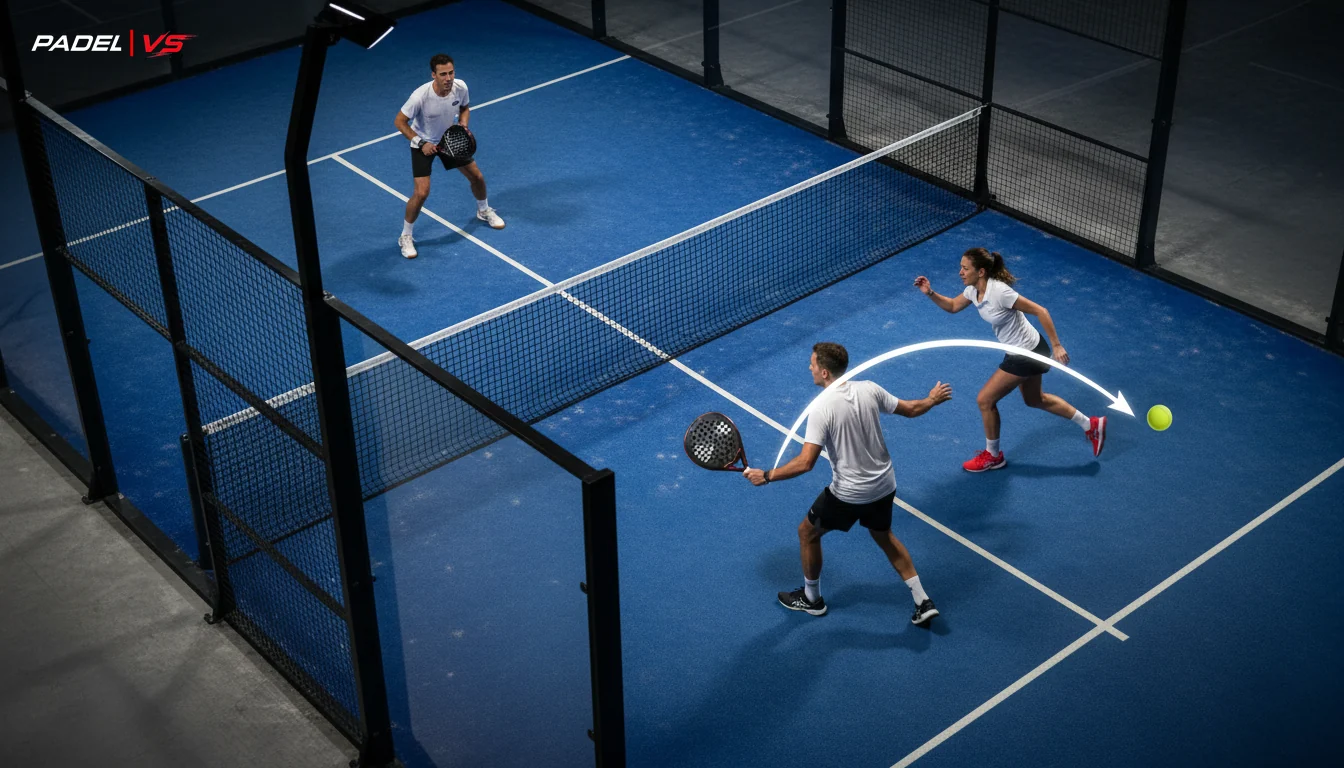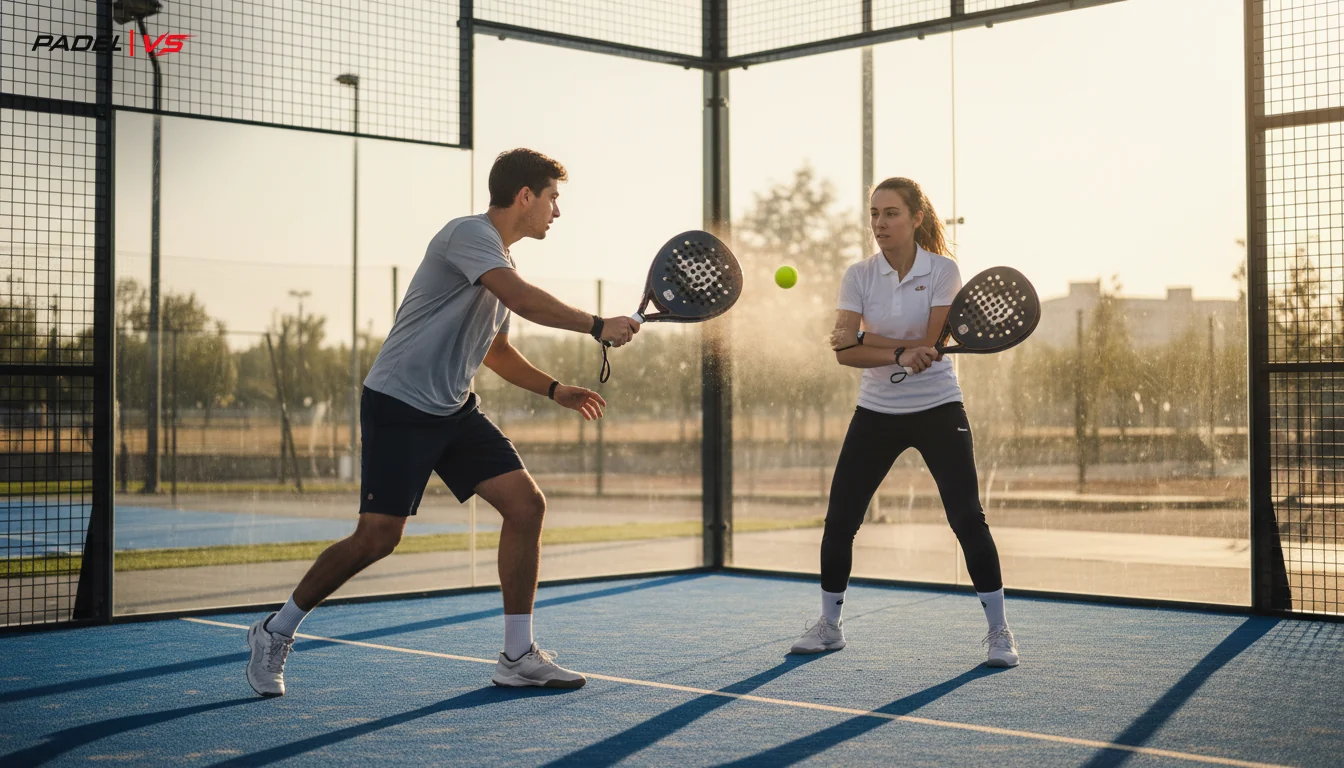

A padel court is not just a backdrop for your match — it's an active variable that fundamentally shapes how the game unfolds. Choosing the wrong court can frustrate beginners or stall the development of players already competing at Tercera level or above. Here's a practical, specific breakdown of how to make that decision intelligently.
The dimensions are fixed — everything else is a variable
Every regulation padel court is 10 meters wide by 20 meters long, with back walls standing 3 to 4 meters tall and side walls at 3 meters. That's standardized by the International Padel Federation (FIP). Beyond those dimensions, the variables that define your playing experience diverge significantly: wall type, floor material, lighting quality, ventilation, and whether the court is indoors or outdoors.
Ignoring these variables is like saying all cars are the same because they have four wheels. A player coming from a club with a 12 mm carpet surface and tempered glass walls will feel an entirely different court at a facility running 8 mm turf and metal mesh. It's the same sport on paper — but the tactical and physical experience is genuinely different.
Glass vs mesh: the choice that impacts your game most

This is the central debate in padel court selection. Tempered glass and metal mesh walls don't just look different — they generate completely distinct bounces that force you to adjust your technique, timing, and court positioning from the ground up.
Tempered glass walls
Standard tempered glass panels used in padel courts are 10 to 12 mm thick. They produce a clean, predictable, high-velocity rebound. The ball exits the wall at roughly the same angle it entered — what physicists call a specular reflection. This is why glass courts are the standard for professional competitions. The World Padel Tour and Premier Padel both use panoramic all-glass courts as their competitive baseline.
What does this mean for your game?
- Rebounds travel farther and faster: after hitting the back glass, the ball covers significantly more ground, giving you time to set up your next shot — if you read the angle correctly.
- Back-wall attacks become explosive weapons: the vibora, smash por tres, and back-glass lobs all generate maximum exit velocity on glass, making them genuinely dangerous shots.
- Wall positioning matters more: standing too close to the back glass means the ball reaches you before you expect it. Proper depth awareness becomes a tactical skill in itself.
- Weather affects the court less: glass doesn't change its bounce behavior with humidity or lateral wind, making conditions more consistent session to session.
Metal mesh walls
Mesh is the more economical and widespread option in public courts, mid-range clubs, and outdoor facilities in warm climates like Cancún or Mérida. The rebound on mesh is shorter, slower, and less predictable — the ball absorbs energy as it makes contact with the wire grid rather than snapping off a solid surface.
- Wall-play tactics lose effectiveness: players who rely on elaborate back-wall combinations will find that tool diminished or eliminated on mesh courts.
- Lobs and dropshots gain prominence: if your game is built around patience, defensive lobbing, and point construction, mesh courts can actually suit your style.
- Maintenance is simpler and cheaper: no risk of cracking under temperature stress or hard impacts, and replacement is far less expensive than a glass panel.
- Wind becomes a real factor on outdoor mesh courts: the mesh structure is more porous and less rigid, meaning lateral wind can push balls off their expected trajectory.
"Playing mesh when you've trained on glass is like switching from a 360-gram racket to a 310-gram one. Same sport, completely different timing — and most players don't account for it." — Common advice among coaches working with Tercera-level and above.
| Feature | Tempered Glass | Metal Mesh |
|---|---|---|
| Rebound type | Clean, predictable, fast | Short, energy-absorbing, variable |
| Wall-play potential | High tactical value | Limited |
| Construction cost (approx.) | Higher — from ~$19,500 USD ($350,000 MXN approx) | Lower — from ~$10,000 USD ($180,000 MXN approx) |
| Maintenance | Delicate (breakage risk) | Simple and economical |
| Required in FIP tournaments | Mandatory at elite level | Not allowed at elite level |
| Best for | Competition, advanced technique | Recreational play, beginners |
The court surface: the detail most players overlook

The type of artificial turf and the amount of silica sand infill directly determine playing speed, shoe traction, and joint protection. Most courts in Mexico use artificial grass with quartz sand infill, but the thickness varies considerably — and that variation matters more than most players realize.
12 mm turf (high-performance standard)
This is the benchmark for competitive courts. The ball bounces higher and more consistently, and player movement feels fluid and responsive. If your game involves quick directional changes, net approaches, or aggressive baseline exchanges, this surface will favor you. Installation of this surface grade runs approximately $5,000-$8,900 USD ($90,000-160,000 MXN approx) for a full court — which is why not every club invests in it.
8-10 mm turf (general use)
More common in recreational and public courts. The ball bounces slightly lower, grip is higher, and movement is marginally slower. For players in Quinta or Cuarta who are still internalizing basic positioning and footwork patterns, this surface can actually be more forgiving — it gives a fraction more reaction time, which at early stages helps build confidence without overwhelming you.
Sand-free synthetic padel surface (premium indoor)
A growing number of high-end indoor courts are moving to sand-free synthetic padel surfaces, similar to those used in Premier Padel tour stops. The bounce is highly consistent, shoes last longer without abrasive sand contact, and controlled lateral sliding improves mobility. If you encounter a court with this surface, it's a strong indicator of serious investment by the club.
Indoor vs outdoor: it's not just about the weather
In cities like Cancún, where temperatures regularly exceed 95°F (35°C) from May through October and relative humidity can hit 85%, playing outdoors at midday is nearly unplayable. But the differences between indoor and outdoor courts go well beyond thermal comfort.
Outdoor courts
- Ball behavior changes with heat: at high temperatures, the internal pressure of a padel ball increases, making it bounce higher and faster than the same ball would on a cool morning. Your timing must adapt in real time.
- Wind becomes a genuine tactical variable: a defensive lob that would land perfectly in still air can fly long or drop short depending on wind direction and speed. This is something to plan for, not complain about.
- Lighting is critical for evening play: outdoor courts with lighting systems below 350-400 lux make it genuinely difficult to track the ball on high lob trajectories. Well-equipped courts run LED systems at 500 lux or higher.
- Surface degradation is faster: UV exposure and rain cycles wear down artificial turf more quickly outdoors, creating inconsistent bounce patterns as the court ages past 4-5 years without maintenance.
Indoor courts
- Year-round controlled conditions: consistent temperature, controlled humidity, and zero wind make the game highly predictable and technically demanding.
- Better environment for technical development: when external variables are eliminated, you can focus entirely on perfecting specific shots without excuses about conditions.
- Acoustics can be an issue: poorly designed indoor facilities create significant echo, which during long training sessions can become mentally fatiguing.
- Hourly rates are generally higher: an indoor court in Mexico City or Monterrey typically runs $33-$67 USD ($600-1,200 MXN approx) per hour, while an outdoor court at the same club might be $19-$39 USD ($350-700 MXN approx).
Choosing based on your PADEL VS category
At PADEL VS, we use an ELO-based system to place players in official categories. The court you choose should align with your current level and where you want to be by the end of the season.
| PADEL VS Category | ELO Range | Recommended Court Type |
|---|---|---|
| Quinta | <850 | Mesh or outdoor glass. Prioritize availability and price. Focus on fundamentals, not environment. |
| Cuarta | 850-1000 | Glass preferred. Start building familiarity with wall rebounds — it's a core skill at this stage. |
| Tercera | 1000-1180 | Tempered glass, 10-12 mm surface. Environment genuinely impacts your technical development here. |
| Segunda | 1180-1350 | Panoramic glass, indoor when possible. Controlled conditions are where real technical refinement happens. |
| Primera | 1350-1550 | Competitive-standard courts. Seek out facilities that meet FIP infrastructure benchmarks. |
| Open | ≥1550 | Professional competition courts only. No compromises on infrastructure quality. |
Quick checklist before booking any court
Before confirming your next reservation, run through these questions. They're simple, but they separate productive sessions from wasted hours:
- Glass or mesh? If the club doesn't state it clearly on their website or social media, ask directly. Don't assume — the two courts at the same club can differ.
- How old is the turf? Artificial turf beyond 4-5 years without replacement develops uneven bounce patterns. Ask or look for signs of flattened, compacted fibers.
- What's the lighting level? For evening outdoor sessions, ask about lux rating or simply visit one evening before booking for competitive use. Poor lighting hurts your eye-tracking more than you realize.
- Is there adequate ventilation? For indoor courts in warm climates, trapped heat without proper air conditioning or cross-ventilation makes extended play miserable and potentially unsafe.
- Are the balls at correct pressure? Some clubs recycle pressureless balls for weeks. A regulation padel ball should rebound between 135 and 145 cm when dropped from a height of 2.5 meters. Bring your own if you're serious about a training session.
- Is the surface dry and clean? Wet outdoor turf is slippery and genuinely hazardous. Check the weather and the court condition before stepping on it — this isn't paranoia, it's injury prevention.
"The perfect court doesn't exist, but the right court for where you are in your development does. Knowing the difference is part of being a smart player."
The most underrated factor: consistency
Here's one of the most practical pieces of advice in padel development: pick a court and stay on it for at least 4-6 consecutive weeks. Most players in Cuarta and Tercera make the mistake of hopping between clubs with different surfaces and wall types every week. Your neuromuscular system needs repeated exposure to the same environment to automate movement patterns reliably.
If you play on outdoor mesh on Tuesday and indoor glass on Thursday, you're effectively training two slightly different sports simultaneously. When you finally find a court that meets the minimum criteria for your level — glass if you're in Tercera or above, decent lighting, surface in good condition — make it your base. Progress comes through stable repetition, not through experiencing variety for its own sake.
How PADEL VS helps you find the right court
At PADEL VS, we're building a network of affiliated clubs starting in Cancún and expanding to more cities. When a club is integrated into our platform, you can view their court specifications — wall type, surface grade, indoor or outdoor — directly at app.padelvs.com / padelvs.com or via the Telegram Mini App (@padelvsbot) before making a booking decision.
For clubs not yet in our network, the straightforward approach is to visit their Instagram or website and ask about court specs directly. PADEL VS is actively growing its affiliate network — when a club joins, you'll be able to book, pay, and review match history at that facility all from one place.
For affiliated clubs, we accept card, bank transfer, cash and crypto (USDT/BTC/ETH), with QR registration at the club — so there's no friction.
Conclusion: the court is part of your training plan
Choosing the right court isn't an advanced player's luxury — it's an intelligent decision available at every level. A Quinta player who understands why they're playing on an outdoor mesh court and makes peace with that context will develop faster than one who books wherever there's availability without a second thought. And a Primera player who insists on glass courts with a well-maintained surface isn't being difficult — they're being professional about their own improvement.
Next time you go to book a session, take two extra minutes to check the court specifications. It's the first tactical move you make before you even step on the court.