If you feel a sharp pain just below your kneecap after an intense padel session, you're far from alone: patellar tendinitis, commonly known as "jumper's knee," is one of the most frequent injuries among players who train three or more times a week. The real problem isn't the pain itself, it's playing through it, because that can turn a two-week nuisance into a chronic injury lasting months.
What exactly is patellar tendinitis?
The patellar tendon connects your kneecap to your shinbone and is responsible for transmitting quadriceps force every time you extend your knee explosively: braking suddenly, jumping for a bandeja, or pushing off during a sharp change of direction. When this tendon repeatedly receives more load than it can tolerate, microscopic tears form in its fibers. At first, the body repairs them, but if the load keeps coming without adequate recovery, the tissue starts to degenerate rather than simply inflame — which is why sports medicine specialists now favor the term patellar tendinopathy over "tendinitis," even though the latter remains the everyday term.
Why padel is particularly hard on the knee
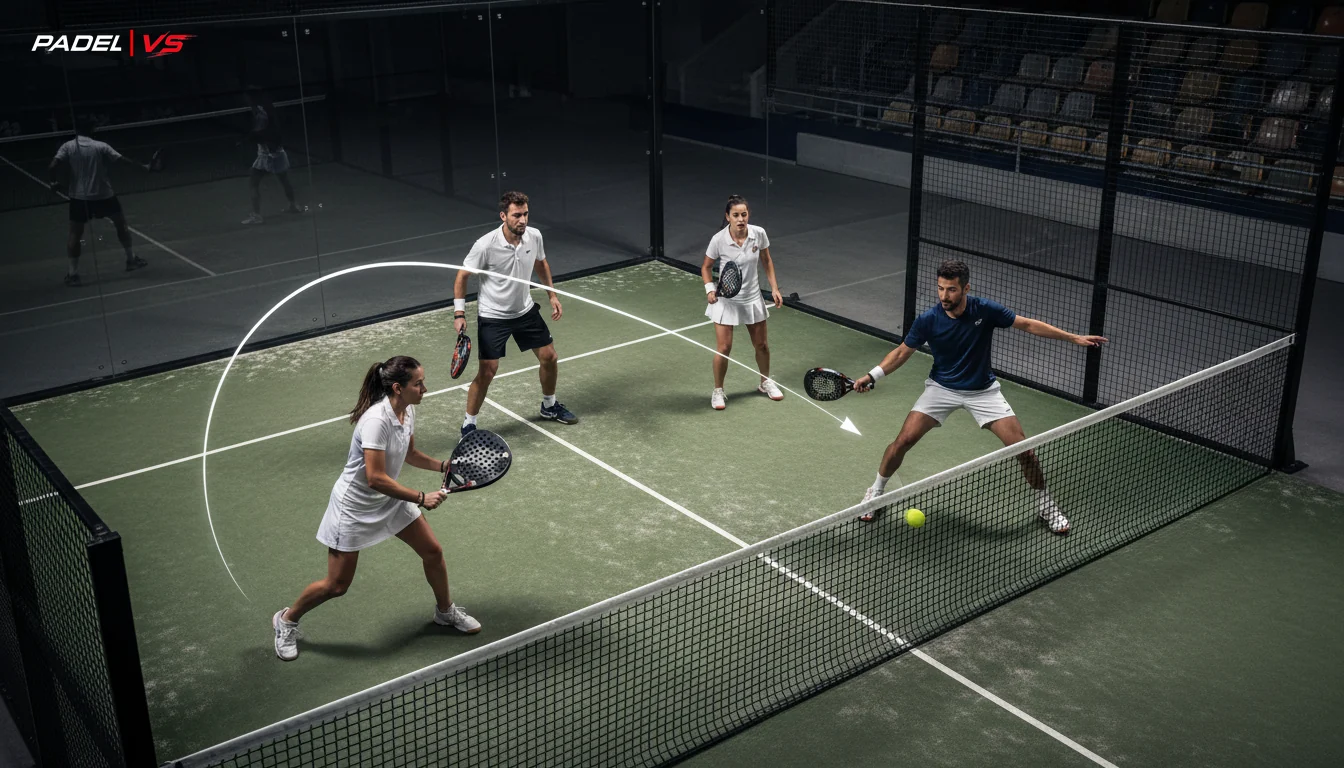
Padel isn't tennis or pickleball, and that distinction matters here. The court measures 20x10 meters and is enclosed by glass walls between 3 and 4 meters tall, which creates a very specific playing pattern: the point doesn't end when the ball crosses the net, it bounces off the glass, forcing constant braking, sprinting, and pivoting inside a confined space.
This translates into dozens of eccentric decelerations per match — the exact moment when the quadriceps and patellar tendon absorb the most load — combined with repeated jumps for the bandeja, víbora, or smash. Unlike a runner, who deals with repetitive but relatively predictable loading, a padel player subjects the knee to unpredictable directional changes on artificial turf or polished concrete, often wearing shoes that aren't specifically designed for the sport.
Factors that multiply the risk
- Playing on hard surfaces with the wrong footwear: running shoes instead of padel-specific shoes with herringbone soles.
- Ramping up frequency too fast: jumping from playing once a week to three or four times without an adaptation period.
- Weak or imbalanced quadriceps and hamstrings relative to the demands of the game.
- Excess body weight or returning from a long layoff without a gradual reconditioning plan.
- Rackets heavier than recommended (above 375-380 g) that alter swing mechanics and shift compensations down into the lower body.
- Insufficient warm-up before competitive matches, especially in tournaments with multiple matches in the same day.
Symptoms: recognizing each stage
Patellar tendinopathy progresses through fairly recognizable stages. Knowing which one you're in completely changes your strategy.
| Stage | Typical symptoms | What it means |
|---|---|---|
| 1. Early | Mild pain only after playing or training, disappears with rest | The tendon is irritated but without significant structural damage |
| 2. Moderate | Pain when starting to play that improves with warm-up and returns afterward | Serious warning sign: the tendon can no longer handle match load well |
| 3. Advanced | Pain throughout the entire match, affecting performance and technique | High risk of major structural injury if play continues |
| 4. Chronic | Constant pain even during daily activities like climbing stairs | Requires medical evaluation and a formal rehabilitation protocol |
An important detail: patellar tendinopathy pain is almost always localized to one very specific spot, right at the lower pole of the kneecap. If the pain is diffuse, moves around the entire knee, or comes with noticeable swelling, clicking, or instability, it's time to rule out other injuries like meniscus or ligament involvement with an orthopedist.
The tendon doesn't warn you with a scream, it warns you with a whisper. The most common mistake in padel is waiting for the scream to pay attention.
Prevention: what actually works
The good news is patellar tendinopathy is largely preventable with specific training. Studies in jumping and cutting sports (volleyball, basketball, padel) consistently point to eccentric quadriceps work as the most effective prevention exercise.
1. Eccentric Bulgarian split squat
Three sets of 8-10 reps per leg, lowering in a controlled 3-4 second count, two to three times per week. This exercise strengthens the tendon in the exact range of motion where the injury typically occurs.
2. Decline squat
Using a 25-degree decline board, this exercise is the gold standard in sports physiotherapy literature for patellar tendinopathy, both for prevention and rehabilitation.
3. Ankle and hip mobility
A knee that compensates for limited ankle or hip mobility absorbs loads it wasn't designed to handle. Five minutes of dynamic mobility work before each session significantly reduces stress on the tendon.
4. Smart load progression
If you're coming from playing once a week, don't jump straight to four intense sessions. Increase frequency or intensity in increments of no more than 10-15% weekly, the same rule runners use to avoid overuse injuries.
5. Footwear and surface
Investing in padel-specific shoes with good cushioning and herringbone soles costs around $80-165 USD ($1,500-3,000 MXN aprox), but measurably reduces impact on knees and ankles compared to generic running shoes.
I already have pain — now what?
If the pain is at stage 1 or 2, the initial protocol is fairly clear and backed by current sports medicine evidence:
- This is not absolute rest: total rest can actually weaken the tendon further. The recommendation is to reduce impact load (fewer matches, fewer jumps) while maintaining controlled activity.
- Ice after playing, 15-20 minutes, to manage acute inflammation.
- Start eccentric work, ideally guided by a sports physiotherapist, beginning with low loads.
- Reassess your weekly playing volume and temporarily reduce it by 30-50%.
- Seek professional evaluation if pain persists beyond two weeks despite these measures.
A session with a sports physiotherapist in Mexico typically runs $35-65 USD ($600-1,200 MXN aprox) per visit, and in most stage 1-2 cases, 4-6 well-focused sessions bring significant improvement.
When can you safely return to court
This is the question everyone asks and the one that gets the vaguest answers. There's no magic number of days off: there's a set of functional tests that tell you whether the tendon is actually ready.
| Criteria | What to evaluate |
|---|---|
| Pain on a 0-10 scale | Should be 0-2 during daily activities and when pressing on the tendon |
| Single-leg hop | You can jump and land on one leg without pain or noticeable compensation |
| Single-leg squat | Strength and control comparable between healthy and affected leg (less than 10-15% difference) |
| Sprint and braking | You can accelerate and brake in a straight line without pain before testing directional changes |
| Directional changes | Final phase: only tested once the previous ones are cleared, starting at low intensity |
The ideal return is gradual: first, soft rallying with no sprints or jumps, then a low-intensity recreational match, and only at the end, full competitive intensity. Skipping phases is the number one cause of relapse, and a patellar tendinopathy relapse usually takes longer to resolve than the original injury.
Coming back early doesn't make you more competitive, it makes you more likely to get hurt again in less time than you think.
The role of playing at your actual level
A risk factor rarely discussed is consistently playing above your real level, forcing explosive movements your body isn't yet prepared for. At PADEL VS we use an ELO-based category system — Quinta (under 850), Cuarta (850-1000), Tercera (1000-1180), Segunda (1180-1350), Primera (1350-1550), and Open (1550+) — precisely so matches stay balanced and physical demand stays proportional to your preparation, instead of a constant battle against opponents well above your level that forces your body to overreach on every point.
During your recovery process, it also makes sense to temporarily reduce competitive match frequency and prioritize lower-impact technical training sessions, something you can easily manage by checking your history and availability directly at padelvs.com or through our WhatsApp bot with AI.
Conclusion
Patellar tendinitis doesn't appear overnight — it's the result of weeks or months of accumulated load the tendon couldn't absorb in time. The key is listening to early warning signs, investing in prevention through eccentric exercise and mobility work, and, if pain is already present, following a return protocol based on functional testing rather than the calendar. Your knee will stick with you for many more years of padel if you take care of it today with the same seriousness you bring to perfecting your bandeja or your víbora.