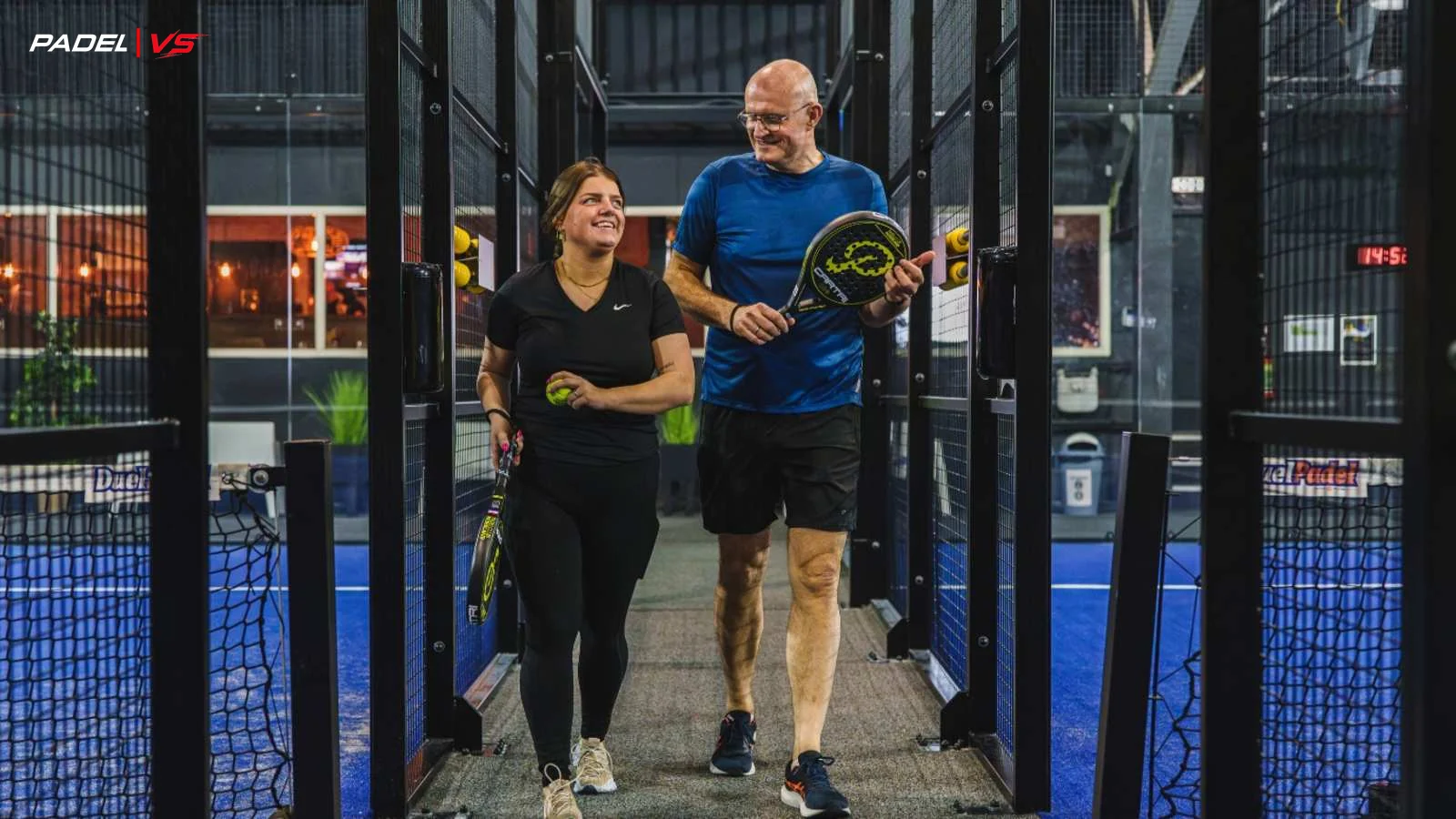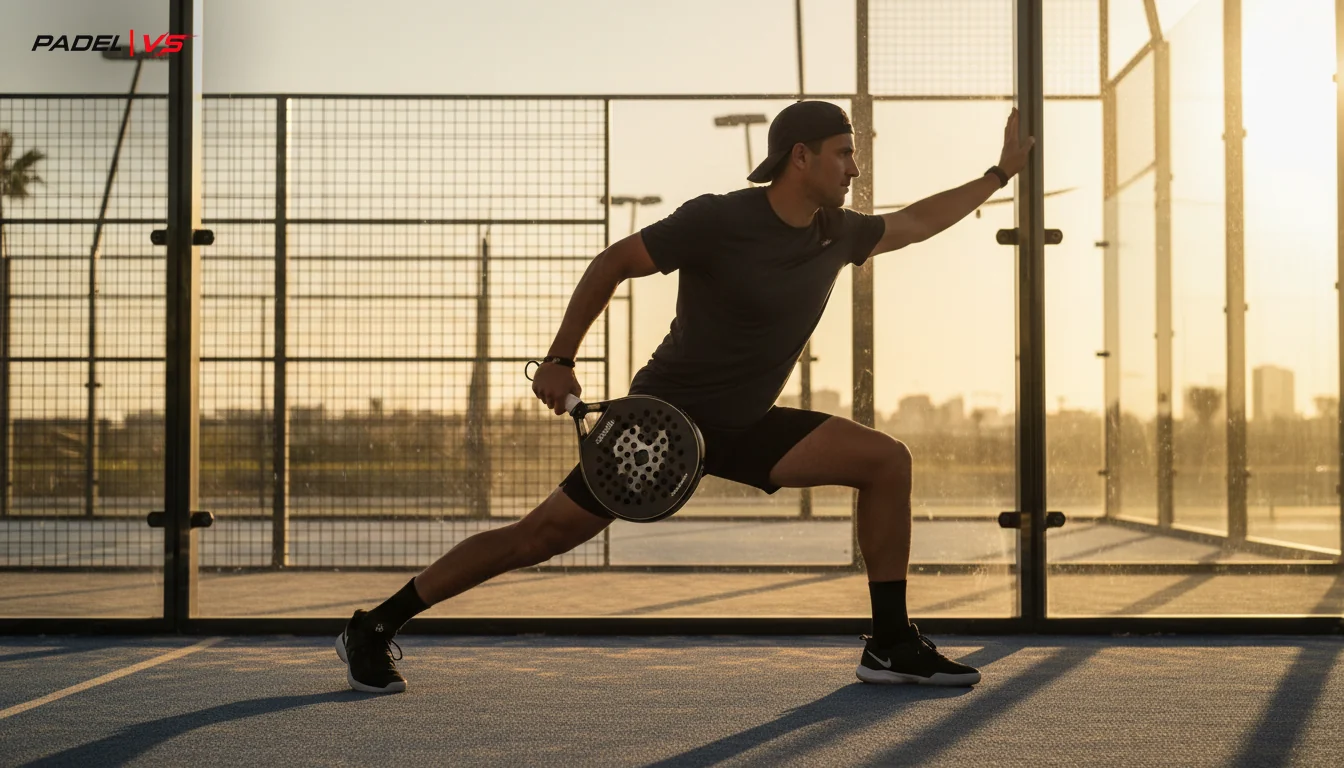
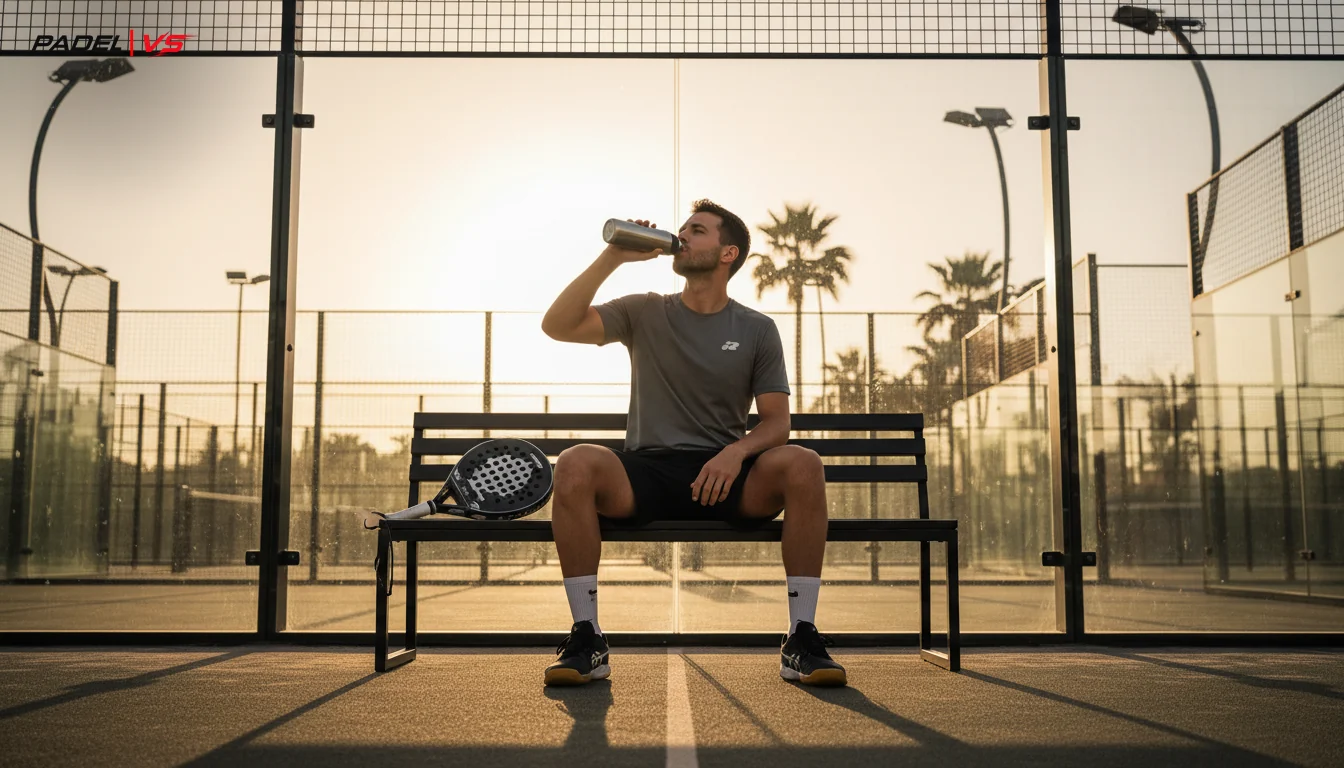
A competitive padel match can last anywhere from 60 to 120 minutes, packed with explosive sprints, constant direction changes, and that sticky heat you find on outdoor courts in Cancún or the Riviera Maya. Without a nutrition and hydration strategy built specifically for this sport, it's common to hit the third set with heavy legs, a foggy head, and unforced errors that have nothing to do with your technique.
Why padel demands its own nutritional strategy
Padel isn't tennis and it isn't pickleball. It's a sport of intermittent, high-intensity efforts: 2-5 second sprints to reach the glass wall, followed by brief pauses while you reposition. On a 20x10 meter court, a Tercera or Segunda level player can cover 3 to 5 kilometers per match, with hundreds of direction changes and shots that demand upper and lower body power simultaneously.
On top of that, there's a factor that matters a lot in Mexico: heat and humidity. Playing at noon in Cancún with 32°C (90°F) and 80% humidity is nothing like playing at night in Mexico City at 18°C (64°F). Your body loses fluid and electrolytes at a very different rate, and that completely changes your hydration plan.
"You don't lose the match on the third-set scoreboard. You lose it two hours earlier, when you decided not to hydrate or eat properly."
Hydration: the factor that decides third sets
Dehydration of just 2% of your body weight already measurably reduces reaction speed, coordination, and decision-making under pressure — exactly what you need to anticipate a lob or finish a bandeja. On hot courts, a player can lose between 0.5 and 2 liters of sweat per hour, and that sweat carries away sodium, potassium, and magnesium — key minerals for your muscles to contract without cramping.
Before the match
- 4 hours before: drink between 5 and 7 ml of water per kilo of body weight (for someone weighing 75 kg / 165 lbs, that's 375-525 ml).
- 1-2 hours before: add another 300-500 ml, ideally with some sodium if you're playing in intense heat (a pinch of salt or an electrolyte tablet).
- Avoid showing up having only had coffee. Excess caffeine without underlying hydration accelerates fluid loss.
During the match
Here's the most common mistake: waiting until you feel thirsty to drink water. By the time you feel thirsty, you're already behind on replenishment. The practical recommendation is to drink 150-250 ml every side change or every 10-15 minutes, especially during breaks between games. If the match runs longer than 60-90 minutes or it's hot, switch from plain water to an isotonic drink with a carbohydrate concentration of 4-8% plus electrolytes (sodium mainly), which absorbs faster than plain water and replaces what you're losing through sweat.
In clubs located in hot regions, many players carry two bottles: one with water and one with a homemade isotonic mix (water, a pinch of salt, lime juice, and a bit of honey or sugar). It's cheap, it works, and it prevents that typical energy crash around minute 45.
After the match
The practical rule is to replace 1.5 liters of fluid for every kilo of weight lost during play (weigh yourself before and after if you want to be precise). Plain water isn't enough if you sweated a lot — you need sodium to actually retain that fluid instead of flushing it out right away.
What to eat before playing
The goal is to arrive on court with full glycogen stores, without feeling digestive heaviness during the match. The ideal window is a complete meal 3-4 hours before, plus a light snack 30-60 minutes before if needed.
| Timing | What to eat | Practical example |
|---|---|---|
| 3-4 hours before | Complex carbs + lean protein + low fat/fiber | Chicken breast, rice, cooked vegetables |
| 60 min before | Simple carbs, easy digestion | Banana, dates, bread with honey |
| 15-30 min before | Only if you feel an energy dip | Sports gel, half a banana |
Avoid high-fat or high-fiber meals right before playing (too much guacamole, beans, heavily spiced food): they slow digestion and steal blood flow and energy that your legs and arms need, plus they add risk of mid-match stomach discomfort.
During the match: staying sharp without feeling weighed down
If a match runs longer than an hour — especially in a tournament format with several matches the same day, common in category brackets on PADEL VS — your body starts depleting available muscle glycogen. That's where a small dose of fast-absorbing carbohydrates makes the difference between holding your level or starting to miss easy lobs in the third set.
- Half a banana between sets
- 2-3 dates
- A sports gel (only if you've already tested it in practice — never try something new on competition day)
- Isotonic drink with 20-30g of carbs per 500ml
If you're playing several matches in a row at a tournament, this point becomes even more critical: fatigue accumulates, and whoever doesn't refuel between matches usually notices the physical difference by the second or third match of the day.
Post-match recovery: the window almost nobody uses
The first 30-45 minutes after finishing are the most efficient metabolic window for recovery. During that time, your body is especially receptive to absorbing nutrients and repairing muscle tissue damaged by hits and sprints.
- Protein: 20-25g for muscle repair (a protein shake, Greek yogurt with nuts, or eggs with tuna).
- Carbohydrates: 1-1.2g per kilo of body weight to quickly refill glycogen, especially if you're playing again the same day.
- Fluids with sodium: to replace what was lost in sweat and avoid the accumulated fatigue you'd otherwise carry into the next day.
"Recovery doesn't start when you get home. It starts in the club parking lot, with the first thing you drink after shaking your opponent's hand."
Common mistakes that hurt your performance
- Playing fasted early in the morning: it sounds good for "burning fat," but in a power sport like padel it leaves you without fuel for explosive efforts.
- Drinking only water in matches longer than 90 minutes in heavy heat: you dilute blood sodium and can suffer mild hyponatremia (dizziness, nausea, cramps), even while drinking enough total fluid.
- Eating a heavy dinner the night before an early tournament: it affects sleep quality and leaves you with pending digestion.
- Trying new supplements or gels on competition day: always test them in practice first.
- Ignoring alcohol the night before: it dehydrates you and affects deep sleep quality, which is key for muscle recovery.
Adjust your plan to your level of demand
The nutritional demand of someone in the Quinta category (under 850 ELO) playing a casual 60-minute match isn't the same as that of a Primera player (1350-1550 ELO) facing three matches in one tournament day at 34°C (93°F). The higher the intensity and accumulated duration, the greater your investment needs to be in electrolyte hydration and carbohydrate replacement between matches.
On PADEL VS, every match you log ties into your profile and your ELO progression by category (Quinta, Cuarta, Tercera, Segunda, Primera, and Open). Over time you'll notice how, on the days you showed up well hydrated and properly carb-loaded, your level of play — and your results — stay consistent even deep into long third sets.
Quick plan to take to the court
| Condition | Hydration | Key nutrition |
|---|---|---|
| Short match, mild climate | Water, 500-750ml total | Light carb snack 1h before |
| Long match (90+ min), moderate heat | Water + isotonic, 1-1.5L | Carbs between sets, full meal 3-4h before |
| Tournament with multiple matches, intense heat (30°C+/86°F+) | Isotonic with sodium, 1.5-2.5L | Carb replacement between matches + post-tournament protein |
Nutrition and hydration aren't a secondary detail in padel — they're part of the invisible training that determines whether you can sustain the level of your shots through an entire match, or whether you fade right when the scoreboard gets tightest. Build these routines into your practice sessions, don't improvise them on tournament day, and you'll notice the difference next time your match goes to a decisive third set.