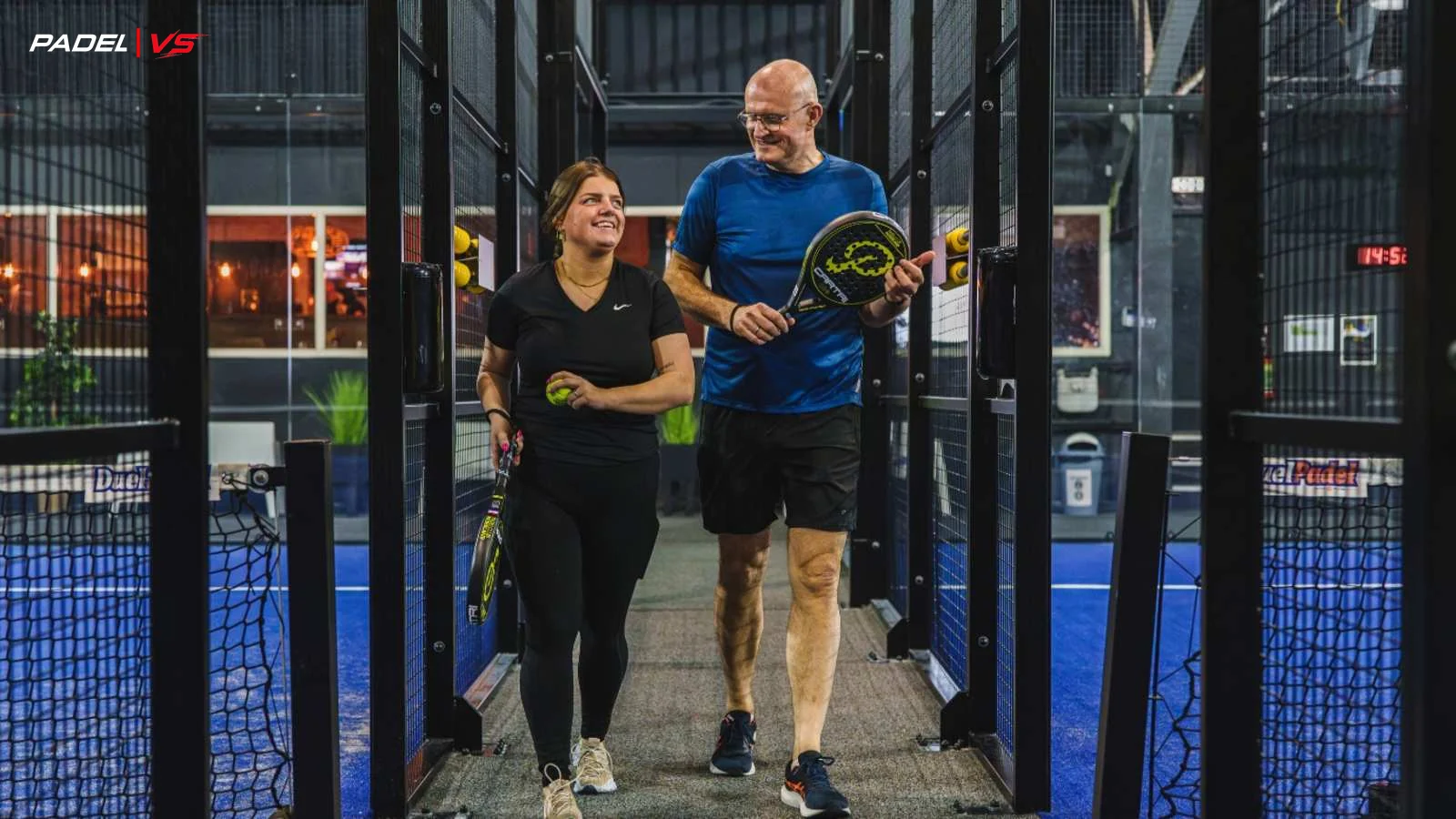

Padel is not tennis, it's not squash, and it's definitely not a casual weekend stroll: it's a sport built on explosive bursts, abrupt changes of direction, and shots taken in compromised positions with glass walls just ten meters away from you. Walking onto the court, unzipping your racket bag, and immediately starting to hit is the fastest way to end your season before it really begins. This guide tells you exactly which stretches to do, in what order, and for how long — so your body is genuinely ready for everything padel demands.
Why padel warmups are different from other sports
A padel court measures 20 × 10 meters and is completely enclosed by glass and wire mesh. That means the ball comes back at you from angles that simply don't exist in any other racket sport. In a competitive match — say, Tercera category (1000-1180 ELO) or higher — a player executes between 300 and 500 direction changes per set, with stops and starts that generate forces on the knee and ankle of up to four times body weight. Add overhead shots (the iconic globo lob and víbora slice), trunk rotations for the cross-court backhand, and dives toward the back glass... and you have a perfect recipe for injury if you arrive cold to the court.
The most common injuries in amateur padel are predictable and, for the most part, preventable:
- Lateral epicondylitis (tennis elbow): repeated impacts without prepared forearm musculature.
- Hamstring strains: explosive bursts from a cold start.
- Ankle sprains: abrupt direction changes on artificial turf.
- Trapezius and cervical contractures: bandeja and víbora overhead shots with shoulder rotation.
- Patellar tendinopathy: the constant low-position stance of the net player.
A well-executed 12 to 18-minute warmup reduces the risk of these injuries by 30% to 50% according to sports medicine research applied to racket sports. It's not magic — it's muscle temperature, joint lubrication, and neuromuscular activation.
"A cold muscle is like a piece of gum just pulled from the freezer: it bends once, it snaps on the second try. Warming up isn't wasting time — it's buying playing time."
The two types of stretching you need to know
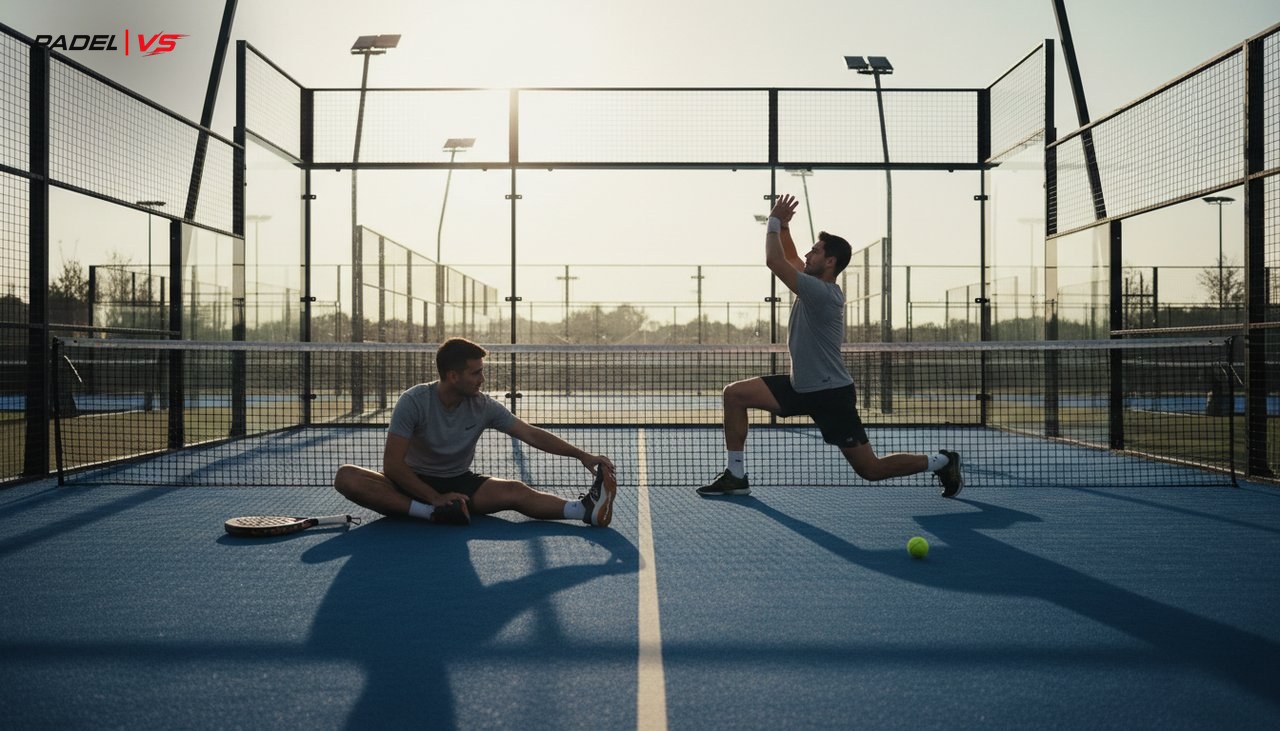
Before diving into the routine, you need to understand a fundamental distinction that many padel players ignore:
| Type | What is it? | When to use it? | Duration per group |
|---|---|---|---|
| Dynamic stretching | Controlled movements that take the joint through its full range of motion without stopping | Before playing | 10-15 reps per side |
| Static stretching | Holding a fixed, sustained stretch position | After playing | 30-45 seconds per group |
The classic mistake you'll see on padel courts is players doing static stretching before jumping onto the court — those "lean your foot against the fence and count to 20" poses — which actually reduce muscle power output and reaction capacity for the first 20 minutes of play. Save deep static stretching for after the match. Before it, everything moves.
The complete routine: 15 minutes before stepping onto the court
Phase 1: General cardiovascular activation (3-4 minutes)
The goal here is to raise your core body temperature by 1-2 degrees Celsius. You don't need to jog a kilometer; the hallway of the club or the area beside the court is enough:
- Light jog or jumping in place — 90 seconds. Easy pace, arms swinging naturally.
- Jumping jacks — 30 reps. Activates shoulders, hips, and elevates heart rate.
- Quick lateral shuffles — 4 lengths (side to side of the court width). Mimics the lateral movement pattern of padel directly.
- Light skipping (knees to chest while walking) — 20 meters out and back.
By the end of this phase you should feel warmth throughout your body and a slight pulse elevation. If you came in wearing a jacket, you'll want to take it off. That's the right signal.
Phase 2: Dynamic joint mobility (5-6 minutes)
Here we work each joint that padel will demand, from the ground up:
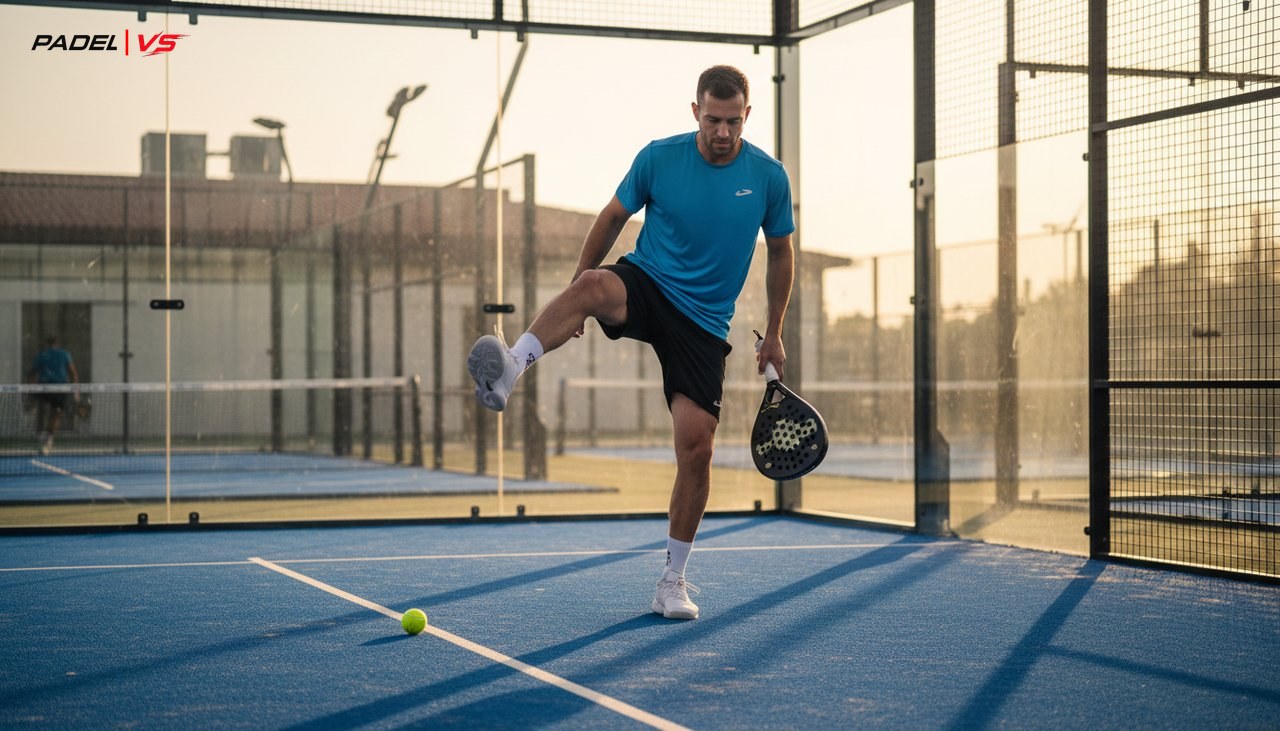
Ankles: Standing on one foot, lift the other and draw circles with the ankle — 10 inward, 10 outward — per leg. The ankle is the most frequently injured joint in padel; 60 seconds here is worth a lot.
Knees: Feet together, hands on knees, draw circles with both knees together — 10 in one direction, 10 in the other. Then, a half squat with a 2-second pause at the lowest point × 12 reps. The ready position in padel is semi-flexed almost constantly; your knees need to be ready for that load from the first rally.
Hips (one of the most important in padel):
- Dynamic forward lunges: step forward long, lower the back knee without touching the ground, return. 10 per leg.
- Standing hip circles: one hand on the wall, lift the opposite knee and draw a wide circle outward — 8 per side.
- Dynamic lateral squats: feet double shoulder-width apart, lower toward one side keeping the opposite leg extended, return to center and switch. 10 per side. This movement directly replicates the lateral split-step toward the side glass wall.
Spine and trunk: Standing trunk rotations with arms extended forward and fingers interlaced — 20 slow, wide rotations. Then, with your padel racket in hand (loose grip), simulate the bandeja overhead motion in slow motion × 10 reps. This also activates the sport-specific neuromuscular pattern of the shot.
Shoulders and rotator cuff:
- Arm circles: 10 forward and 10 backward with each arm, starting small and gradually widening the circle.
- Internal/external rotation with a resistance band or bodyweight: arm at 90°, rotate as if performing a serve motion. 15 per side. If you don't have a band, do it free with imagined resistance — it works.
- Palms forward, arm straight, cross in front of your chest and hold 2 seconds × 10 per arm (this is dynamic, not prolonged static).
Wrist and forearm (critical for preventing epicondylitis): Extend your arm with the elbow straight, slowly flex and extend the wrist × 15. Then rotate the wrist in circles × 10 per direction. Finally, with your hand in a fist, squeeze and open rapidly × 20. In padel, impact goes directly to these tissues with every single shot — don't skip this.
Neck and cervicals: Very gently. Slow lateral tilts (ear toward shoulder), slow side-to-side rotation, chin to chest. No full neck circles — that movement is not recommended in modern physiotherapy. 30 seconds total is enough here.
Phase 3: Padel-specific neuromuscular activation (3-4 minutes)
This phase closes the warmup and is where many players fall short. Your brain needs to remind your body of padel's specific movement patterns before the match begins:
- Shadow strokes: Without a ball, simulate 10 forehand drives, 10 backhands, and 10 bandeja overheads at medium-high speed. Focus on the full hip and shoulder rotation, not just arm movement.
- Continuous split steps: The split step is that small anticipation hop you make just before your opponent strikes the ball. Do it 20 times consecutively, alternating toward left and right after each one. Your central nervous system needs to activate that reflex pattern before points are on the line.
- Soft rallying from the baseline: The first 3-5 minutes inside the court should be at low tempo — no winners, no powerful drives. Let the ball barely clear the net. This is still part of your warmup, not the match itself.
"The five minutes you spend hitting softly at the start aren't wasted time — they're the difference between finding your rhythm by point 20 or arriving at point 5 with a stiff shoulder and no timing."
Adapt your warmup to your category
Warming up for a social match in Quinta (<850 ELO) is not the same as preparing for a Primera tournament (1350-1550 ELO). The higher the level, the more intense the exchanges and the greater the physical demand on every system in your body:
| Category | Recommended warmup duration | Additional emphasis |
|---|---|---|
| Quinta / Cuarta | 10-12 minutes | Basic mobility, getting comfortable with your own rhythm |
| Tercera | 12-15 minutes | More complete neuromuscular activation phase |
| Segunda / Primera | 15-20 minutes | Resistance bands, additional rotator cuff work |
| Open (≥1550 ELO) | 20-25 minutes | Full professional protocol — physiotherapist recommended |
Environmental factors that change everything in Mexico
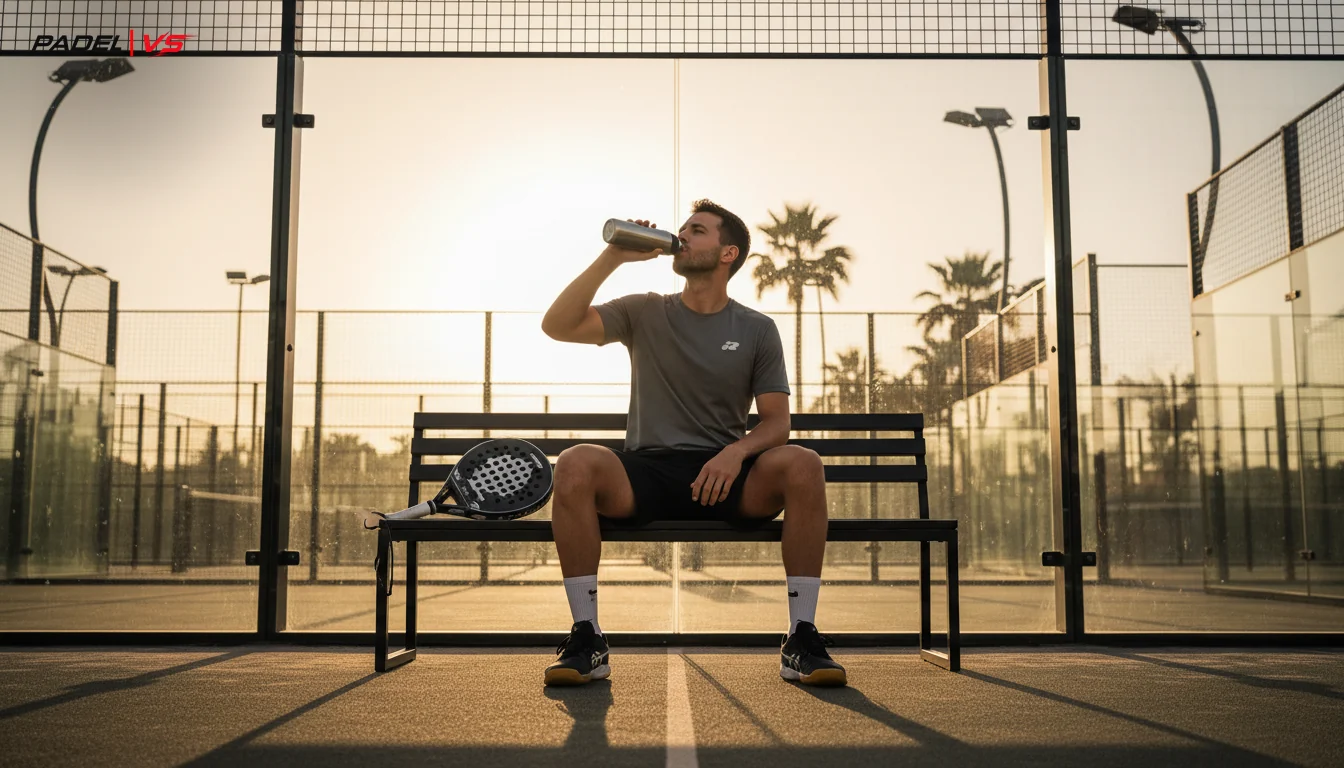
If you play in Cancún, Mérida, or any coastal city where temperatures regularly hit 30°C (86°F) or above, your warmup can be slightly shorter — the ambient heat already helps raise muscle temperature. However, intense sweating means you need to hydrate before stepping onto the court: arrive having consumed at least 500 ml of water in the hour prior to playing.
If you play in Mexico City at over 2,200 meters above sea level, cardiovascular demand is higher and available oxygen is lower. In that case, the cardiovascular activation phase should be more gradual and the total warmup may require an additional 2-3 minutes for your body to properly adapt. Many CDMX players who travel to Cancún for tournaments notice that their performance improves in the first sets — partly because oxygen availability is more favorable — but that also means they've arrived to play without the altitude context that normally pushed them to warm up thoroughly.
After the match: the static stretching you actually should do
This article focuses on pre-match warmup, but it would be irresponsible not to mention that post-match static stretching is equally critical. When you finish playing, with your muscles still warm, dedicate 8-10 minutes to:
- Hamstrings: seated on the floor, leg extended, reach toward your foot. 40 seconds per side.
- Quadriceps: standing, heel to glute. 40 seconds per side.
- Calf/soleus: foot against the wall, knee straight. 30 seconds per side.
- Chest and shoulder: arm against the net post or wall, rotate your body away. 30 seconds per side.
- Forearm flexor and extensor: the classic palm-up and palm-down wrist stretch. 30 seconds per side.
How PADEL VS supports your physical preparation journey
At PADEL VS we're building more than a tournament platform — we want players to arrive genuinely prepared for every match. When you log your matches and climb through competitive categories — from Quinta toward Cuarta, from Tercera toward Segunda — the ELO system reflects real improvement. But those improvements only happen if your body can sustain increasing intensity without breaking down mid-season.
Through padelvs.com or via the WhatsApp AI bot, you can review your match history and identify moments in the season where your performance dips — these often coincide with periods of play without proper physical preparation. The platform is in its early stage, growing from Cancún toward other cities, and part of that growing community is sharing exactly this kind of practical knowledge with players at every level.
Book your next match at padelvs.com — we accept card, bank transfer, cash and crypto (USDT/BTC/ETH), with QR registration at the club. No excuse not to have your spot locked in while you focus on taking care of your body.
The smart player's pre-match checklist
Save this on your phone and check it before every match:
- ☐ Arrived at the club at least 20 minutes before the match
- ☐ Drank 500 ml of water in the hour before play
- ☐ Completed 3-4 minutes of light cardiovascular activation
- ☐ Worked through dynamic joint mobility from ankles to neck
- ☐ Specifically activated shoulders and wrists
- ☐ Did shadow strokes before entering the court
- ☐ First 5 minutes inside the court were soft rallying
- ☐ Have a plan to stretch properly after the match
Padel is a sport you can play for decades if you treat your body right. The players you see in Primera category or at Open tournaments at 45 or 50 years old didn't get there in spite of their age — they got there because for years they've treated their body as part of their equipment. The most expensive racket on the market will not protect a knee you didn't warm up. Only habit, consistency, and the 15 minutes you decide — before every single match — to invest in yourself will do that.