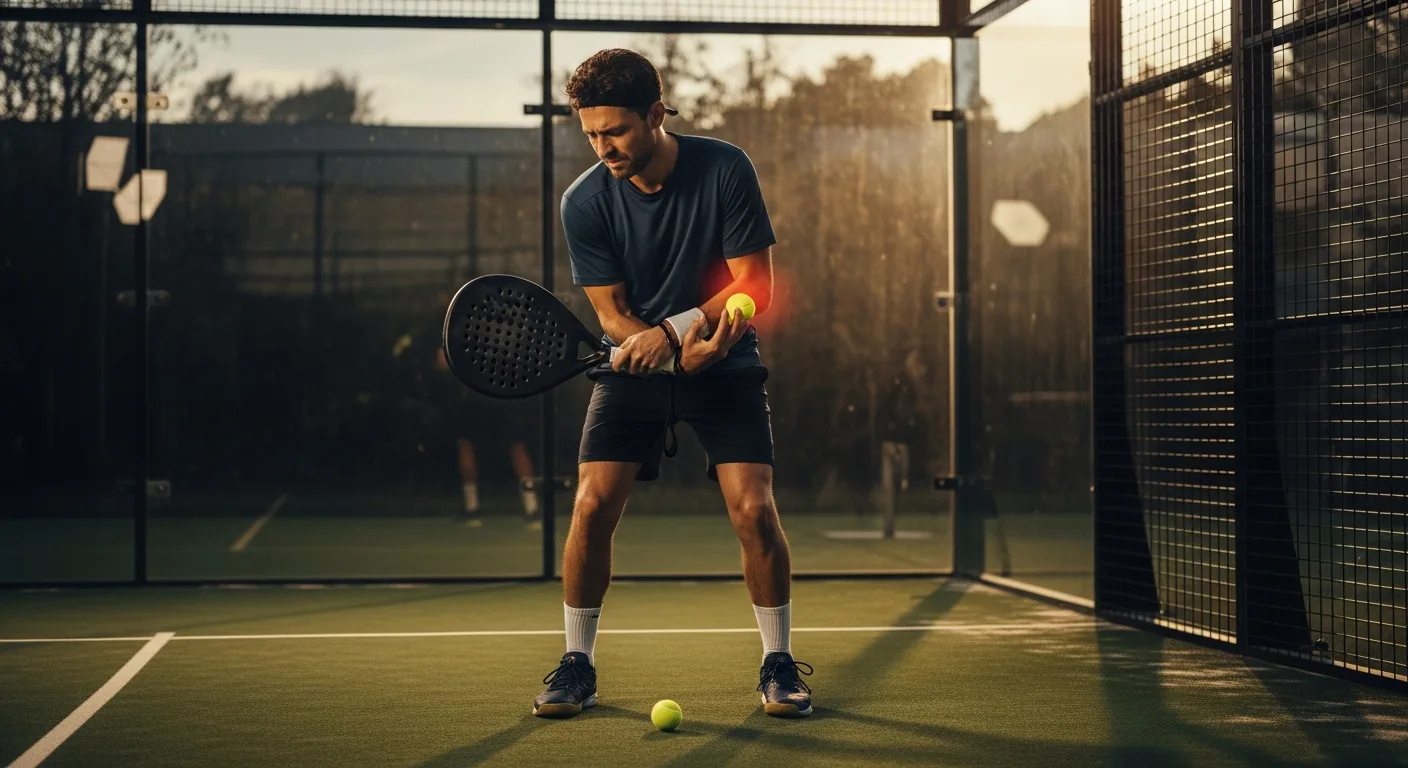
Lateral epicondylitis — commonly known as "tennis elbow" — is the most frequently diagnosed musculoskeletal injury among padel players at every level of the game. Unlike tennis, where the extended-arm backhand is the main culprit, padel creates a more complex injury mechanism that most players don't fully understand, which is exactly why what starts as a minor annoyance often becomes a chronic condition that sidelines you for months.
What Exactly Is Epicondylitis and Why Does Padel Trigger It?
The lateral epicondyle is a bony prominence on the outer side of the elbow where the wrist and finger extensor muscles attach via a common tendon. When these tendons are overloaded repetitively, a degenerative tendinopathy develops — micro-tears accumulate in the extensor tendon fibers, eventually producing inflammation, localized pain, and grip weakness.
Padel places a very specific and sustained load on this structure. The sport's unique characteristics create a perfect storm for epicondyle overuse:
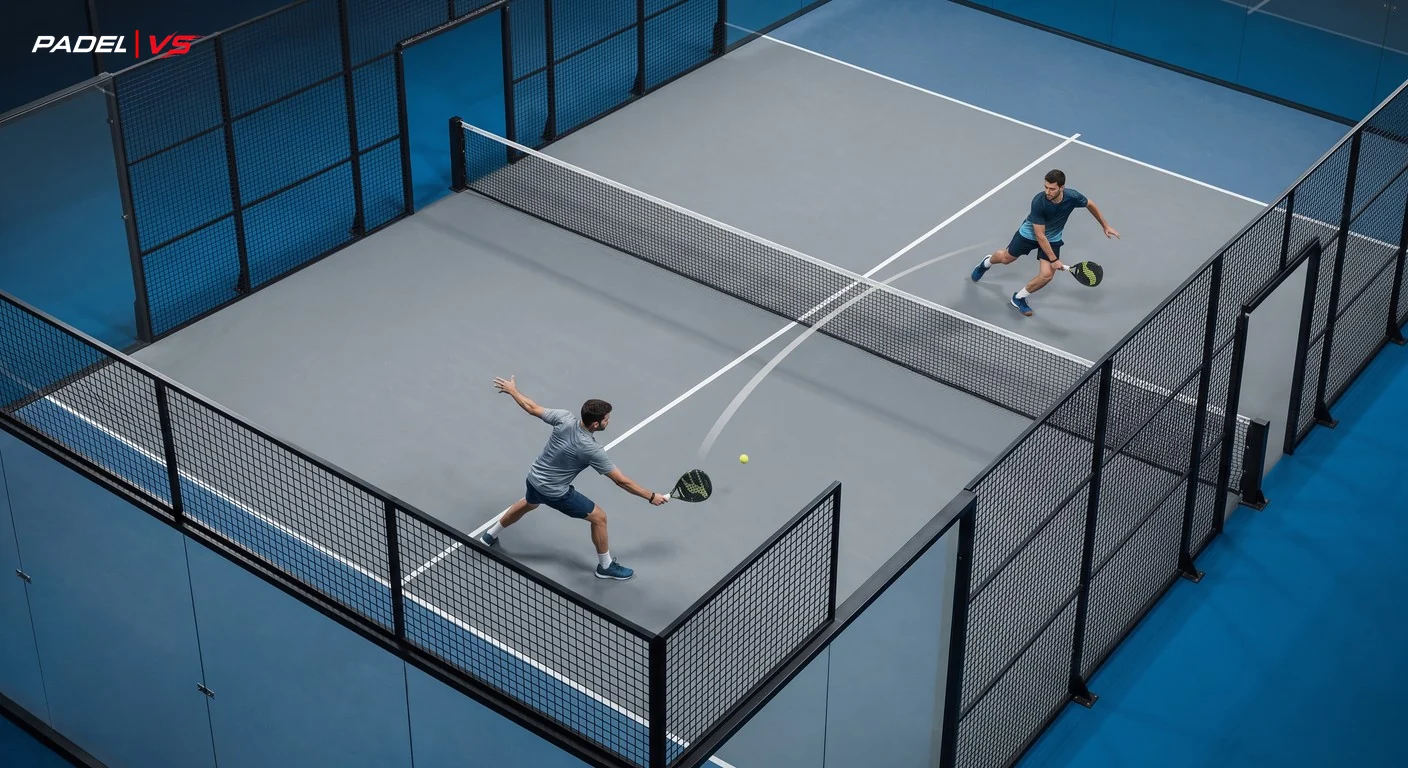
- Compact court, compressed mechanics: A padel court measures 20 x 10 meters — significantly smaller than a tennis court. Glass walls and wire fencing return the ball at unpredictable angles, forcing players to strike with the elbow semi-flexed and the wrist in forced extension, limiting the natural absorption arc.
- The bandeja and víbora: These padel-specific overhead shots involve an abrupt forearm rotation combined with wrist extension — the most mechanically damaging movement pattern for the lateral epicondyle. They're also executed dozens of times per match.
- Reactive wall shots: Hitting the ball off the back glass under time pressure, particularly from the net position, means technique is frequently sacrificed. The wrist absorbs what the shoulder and elbow should distribute.
- Racket weight and vibration transmission: A padel racket weighs 355-380 grams with a perforated, textured surface. Off-center impacts outside the sweet spot amplify vibration transmission to the elbow dramatically compared to hitting squarely.
Symptoms: Telling Epicondylitis Apart from Other Elbow Problems
One of the most costly mistakes padel players make is dismissing early epicondylitis as post-match muscle soreness or a minor strain. By the time they seek treatment, the tendon has often been degenerating for weeks. Here's a practical comparison:
| Symptom | Lateral Epicondylitis | Muscle Contracture | Medial Epicondylitis (Golfer's Elbow) |
|---|---|---|---|
| Pain location | Outside of elbow | Forearm muscle, diffuse | Inside of elbow |
| When it hurts most | Resisted wrist extension | Stretching the muscle | Resisted wrist flexion |
| Pain gripping the racket | Yes, notably | Minimal | Yes, with heavy objects |
| Typical duration untreated | Weeks to months | 2-5 days | Weeks to months |
A simple self-screening test: extend your arm fully, make a fist, and bend your wrist upward against the resistance of your other hand (the Cozen's Test). Sharp pain at the lateral epicondyle is a strong indicator. This doesn't replace a medical diagnosis, but it's an early warning signal you shouldn't ignore.
"The average padel player waits 6 to 8 weeks before seeking medical attention for elbow pain — by which point the injury has been developing for months. The difference between weeks of treatment and months off the court is how quickly you decide to act."
Padel-Specific Risk Factors You Can Actually Control
Not every padel player develops epicondylitis. Understanding the modifiable risk factors is half the battle:
Using the Wrong Racket for Your Level
A diamond-shaped racket with high balance (more weight toward the head) generates significantly more torque on the elbow at impact. Without the technique and forearm strength to absorb that energy, the load goes straight to the tendon. For players in their first two years of playing, round or teardrop-shaped rackets weighing 355-370 grams with a medium-to-low balance are substantially safer. Thick grip handles (4.5 cm circumference or above) also reduce the muscle effort required to hold the racket, directly lowering epicondyle stress.
Technical Flaws in High-Repetition Shots
The poorly executed bandeja is the single biggest technical contributor to epicondylitis in intermediate-level players. When the elbow leads the movement instead of the shoulder initiating and driving it, all rotational force is absorbed by the epicondyle insertion. The same applies to overhead smashes struck with the arm bent rather than in controlled extension.
Rapid Volume Spikes
Going from 2 hours per week to 6-8 hours within a few weeks — extremely common when someone catches the padel bug — overloads tendons before they can adapt. Tendons require approximately 8 to 12 weeks of gradual progression to safely accommodate a new training load. This is known as the reactive phase of tendinopathy, and compressing that adaptation window is one of the clearest predictors of injury.
Age and General Physical Condition
Epicondylitis peaks between ages 35 and 50 — almost exactly the demographic that dominates amateur padel. Tendon vascularity decreases with age, which slows the natural repair of micro-tears. This doesn't mean older players can't play intensely; it means they need longer warm-ups, better recovery protocols, and more consistent preventive strengthening.
Treatment: The Evidence-Based Phase Protocol
The treatment landscape for lateral epicondylitis has evolved significantly. The old "complete rest until it stops hurting" approach has been replaced by structured progressive eccentric loading protocols, which show consistently better long-term outcomes. Here's the phase breakdown:
Phase 1: Acute Pain Management (Weeks 1-2)
- Stop playing padel. This is not negotiable in the first phase — continuing to load an acutely inflamed tendon converts an acute condition into a chronic one.
- Ice application for 15-20 minutes, 3-4 times daily for the first 3-4 days.
- Topical anti-inflammatories (diclofenac gel) or systemic NSAIDs as directed by your physician.
- Epicondyle strap: a compression band worn 3-5 cm below the elbow redistributes load away from the tendon during daily activities like gripping, typing, and lifting.
Phase 2: Eccentric Loading Protocol (Weeks 3-6)
Eccentric wrist exercises are the most evidence-supported intervention for epicondylitis. The Tyler protocol remains the standard:
- Sit with your forearm resting on your thigh, wrist hanging off the edge of your knee, palm facing down.
- Use your healthy hand to passively bring the injured wrist upward (into extension).
- Release the healthy hand and slowly lower the wrist over 3-5 full seconds (the eccentric phase).
- 3 sets of 15 repetitions, twice daily, for 6 consecutive weeks.
The critical nuance: there should be mild discomfort (3-4 out of 10 on a pain scale) during the exercise. Zero pain means the tendon isn't being adequately stimulated. Pain above 5/10 means you're loading too aggressively — stop and consult your physiotherapist.
Phase 3: Strengthening and Progressive Return (Weeks 7-12)
- Add forearm pronation/supination with a light dumbbell (2-4 lbs / 1-2 kg).
- Rotator cuff and scapular stabilizer strengthening — the kinetic chain for a padel stroke begins at the shoulder, and weakness there increases compensatory elbow load.
- Return to court: start with 20-30 minutes of gentle volleying, no overhead shots or offensive smashes for the first 2-3 sessions. Build from there over 3-4 weeks.
What About Corticosteroid Injections?
Cortisone injections provide rapid short-term relief but have mixed long-term evidence — several studies show worse outcomes at 12 months compared to eccentric exercise alone. Platelet-rich plasma (PRP) injections show promising results for chronic cases (more than 3 months of persistent symptoms), at approximately $165-330 USD ($3,000-6,000 MXN approx) per session at specialized sports medicine clinics in Mexico. Always consult a sports medicine physician before pursuing any injection therapy — they're tools for specific clinical scenarios, not shortcuts around rehabilitation.
Equipment Adjustments That Prevent Relapse
Returning to the court with the same racket and worn overgrip that contributed to your injury is the most predictable path to relapse. These changes make a measurable difference:
| Factor | Elbow-Friendly Choice | What to Avoid |
|---|---|---|
| Racket shape | Round or teardrop (low/medium balance) | Diamond with high balance |
| Weight | 355-370 grams | Over 380g without proper adaptation |
| Core material | Soft EVA foam or HR3 | Extra-stiff fiberglass without dampening |
| Grip thickness | 4.5 cm+, fresh overgrip | Thin, worn grip (amplifies vibration) |
| Elbow strap | Wear during return phase | Playing unprotected in first 3-4 weeks back |
Return Timeline by PADEL VS Category
Your competitive level directly determines the intensity of load your elbow faces on return. In PADEL VS, we classify players with specific ELO-based categories, and the return protocol should match the demands of each level:
- Quinta (<850 ELO): Rally pace is slower and shots less forceful. With proper Phase 1-3 treatment, most players can return to full sessions within 8-10 weeks. Focus on maintaining clean wrist-neutral mechanics on every stroke before adding pace.
- Cuarta (850-1000 ELO) and Tercera (1000-1180 ELO): The bandeja and víbora are now regular weapons in your game, which means overhead mechanics must be specifically cleared before full return. Avoid shots above shoulder height until weeks 10-12 minimum.
- Segunda (1180-1350 ELO) and Primera (1350-1550 ELO): Match intensity and weekly volume at these levels are high. Supervision by a sports physiotherapist throughout the return phase isn't optional — it's what separates a successful return from a chronic cycle of re-injury.
- Open (≥1550 ELO): At this level, your body is your competitive asset. An individualized return-to-competition protocol designed by a sports medicine specialist is the only responsible path forward.
"Epicondylitis isn't caused by one shot — it's caused by thousands of poorly absorbed shots accumulated over weeks. Coming back to the court properly means coming back once."
Prevention: What Players Who Never Get Injured Actually Do
Players who rarely develop epicondylitis share consistent habits that protect the full kinetic chain, not just the elbow:
- Padel-specific warm-up before every session: 5 minutes of shoulder rotations, gentle wrist circles, and rotator cuff activation. Never walk straight onto the court and start hitting hard — the tendon needs time to achieve proper blood flow and viscoelastic compliance.
- Forearm strengthening twice weekly: Wrist curls with 2-4 lbs, pronation/supination exercises, preventive eccentric extensions. Fifteen minutes twice a week significantly reduces long-term injury risk.
- Consistent post-match stretching: Arm fully extended, wrist bent down by the opposite hand for 30 seconds. Three repetitions per arm. Simple, but the players who do it consistently are the ones who play year-round without breaks.
- Regular overgrip changes: Replace the overgrip every 6-8 hours of playing time. A slippery grip forces compensatory gripping strength that loads the epicondyle directly — this is one of the most underestimated contributors to elbow injury.
- Periodic technical coaching: One session per month with a certified coach who specifically reviews your bandeja and smash mechanics can prevent months of rehabilitation. It's the highest-return-on-investment injury prevention you can do in padel.
Tracking Load and Playing Smart with PADEL VS
At PADEL VS, we're building a competitive padel community where player health is as fundamental as your ELO ranking. Through padelvs.com, you can track your match history and playing frequency — valuable data for recognizing when you're accumulating volume spikes that historically precede overuse injuries. You can also reach us via the WhatsApp bot or the Telegram Mini App (@padelvsbot) to find tournaments at the right competitive level for your return phase, so you're not jumping back in at too high an intensity too soon.
Tennis elbow in padel is common, but it's far from inevitable. With an accurate diagnosis, a structured eccentric loading protocol, the right equipment adjustments, and honest technical coaching, the vast majority of players make a full recovery without relapse. The only real shortcut is skipping steps — and that shortcut reliably leads to six more weeks of rest. Treat the tendon right, and the court will be waiting for you exactly when you're ready.