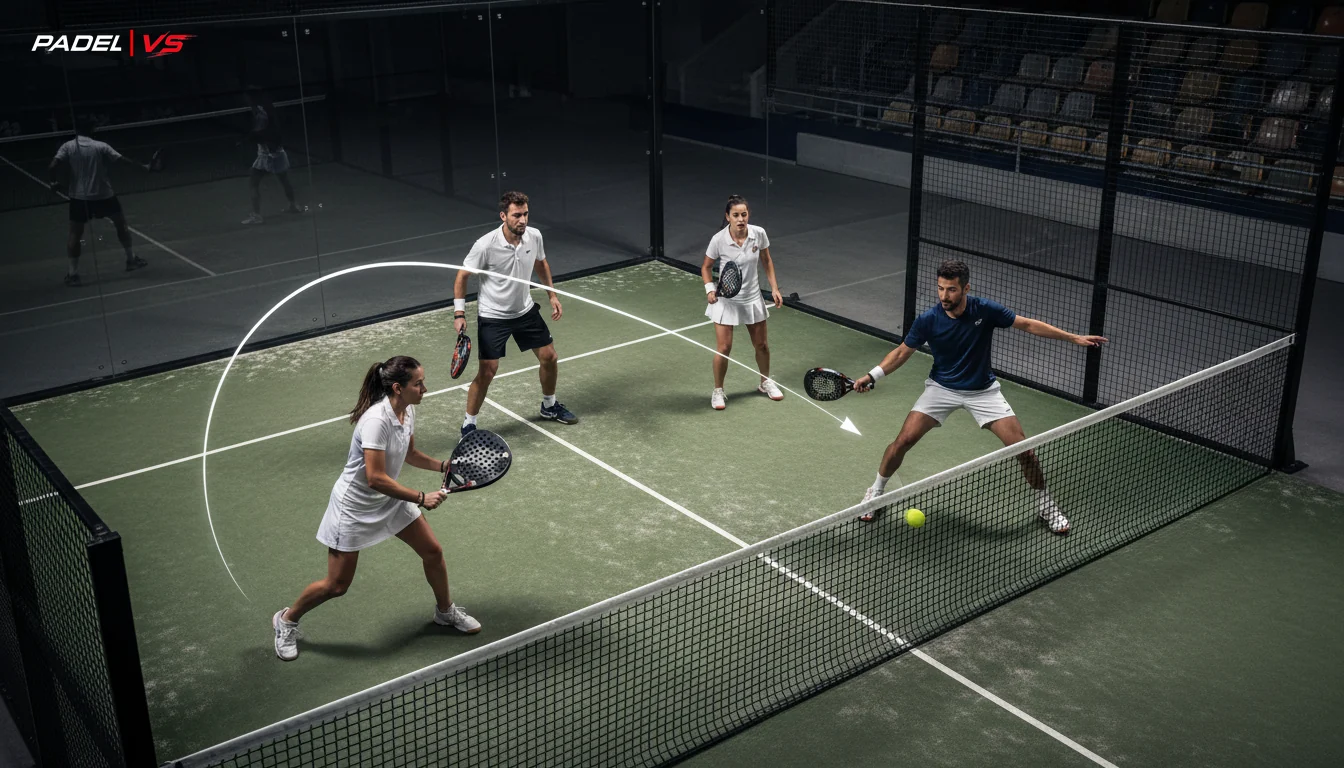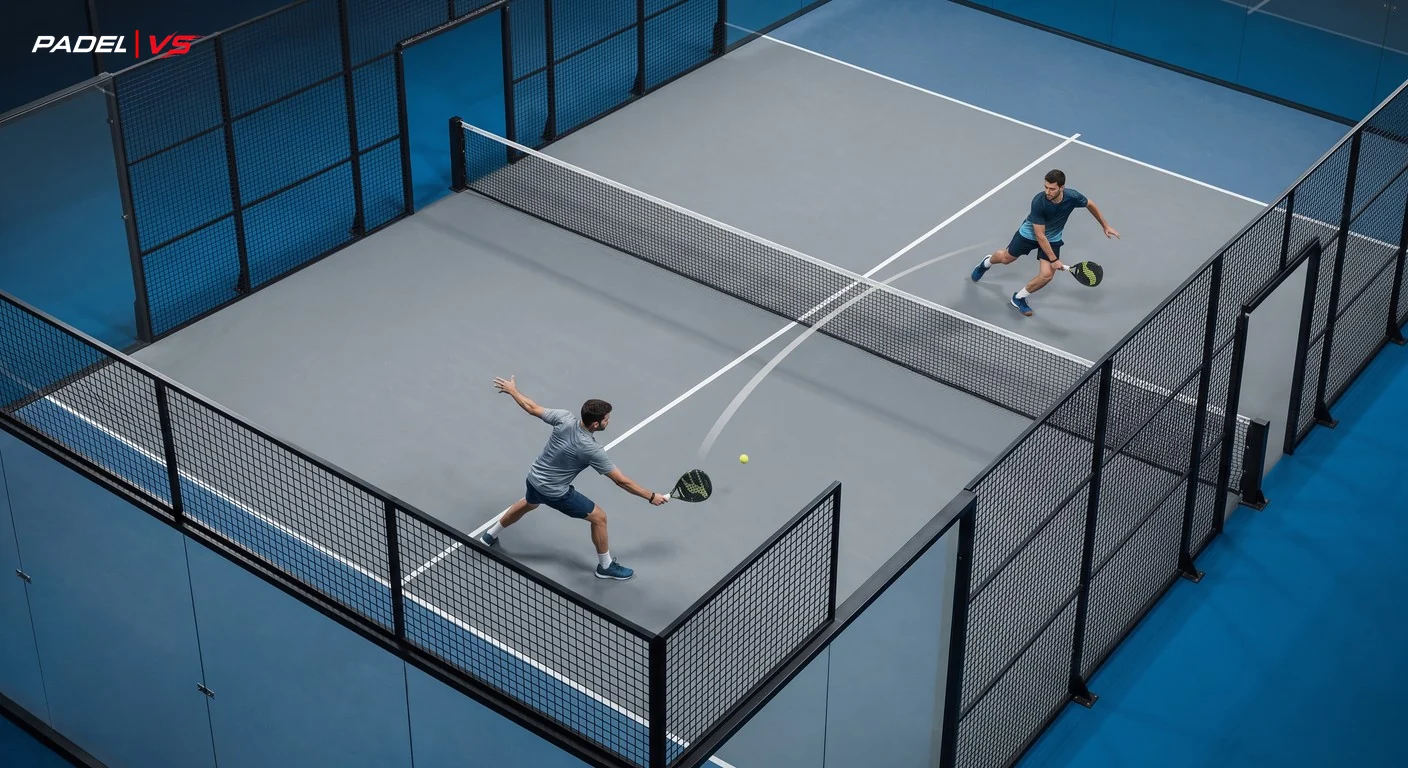

Playing outdoor padel when the wind is pushing 20 to 25 mph is a completely different sport from the climate-controlled indoor courts where most players develop their game. The ball moves in ways that feel almost random, lobs become either devastating weapons or catastrophic mistakes depending on who's using them, and most players respond with frustration rather than adaptation. The ones who read the wind in the first few points and make deliberate adjustments are the ones who close out sets.
Why Wind Affects Padel More Than Other Racket Sports
Padel has specific characteristics that make it uniquely sensitive to wind. First, the ball has relatively low internal pressure — between 4.6 and 5.2 psi according to FIP regulations — which means it's lighter relative to its size than a tennis ball, and far more susceptible to being pushed off course. Second, the court is compact: 32.8 feet wide by 65.6 feet long. That means a sideways gust can shift the ball's trajectory by 18 to 20 inches mid-flight — more than enough to turn a perfectly calculated shot into an unforced error off the wrong glass wall.
Third, and this is what most players overlook: the glass walls interact differently with the ball under windy conditions. When the ball bounces off the back wall in the wind, it comes out with a different angle and speed than you'd expect indoors. The wind can accelerate or deaden the ball after the rebound, completely disrupting your timing if you're not paying attention.
"The wind isn't working against you. It's working against both teams. The difference is who accepts it first and who keeps fighting it."
Step One: Read the Court Before the Match Starts
Before the first point, spend two minutes actively understanding what the wind is doing. This isn't optional in outdoor padel — it's tactical preparation as important as your warm-up groundstrokes.
The Three Questions You Need to Answer During Warm-Up
- Where is the wind coming from? Is it a headwind, tailwind, crosswind from the left, crosswind from the right, or diagonal? Each requires completely different adjustments.
- Is it steady or gusting? A consistent 20 mph headwind is predictable and compensatable. Irregular gusts are more dangerous because you can't anticipate exactly when they'll affect the ball.
- Does it vary across different zones of the court? Many outdoor clubs have surrounding structures, walls, or buildings that create wind pockets. The back third of the court might have significantly more wind than the net zone.
Watch carefully how your lobs, bandejas, and serves behave during warm-up. That information is more valuable than any pre-planned tactic.
Technical Adjustments by Wind Type
Headwind (You're Playing Into the Wind)
This is the scenario that causes the most panic among players in the lower categories, because shots lose depth dramatically. A defensive lob that normally lands around the 52-55 foot mark might only reach 40 feet with a strong headwind — giving your opponents an easy overhead smash instead of forcing them back to the glass.
Necessary technical adjustments:
- Increase your swing speed by 15-20%: Don't just swing harder with the same mechanics. Accelerate the racket head faster through contact while keeping your wrist firm. The difference is controlled acceleration versus brute force.
- Drop your contact point 2-3 inches: Making contact slightly lower gives you a more natural upward angle, helping offset the wind resistance without overhitting.
- On lobs: aim 4-5 feet deeper than your normal target. If your standard defensive lob lands 6 feet from the back wall, aim to land it 1-2 feet from the glass.
- On serve: add more topspin. A flat serve into a headwind can stall, fall short, or lose all its bite. Extra topspin keeps the ball moving forward with energy and depth.
Tailwind (The Wind Is Behind Your Shots)
Paradoxically, a tailwind generates more errors among intermediate players than a headwind does. The ball is faster, lobs fly long, and players start missing shots they'd normally make in their sleep. The key here is to subtract, not add.
- Reduce your swing by 20-25%: Let the wind do part of the work. A controlled, precise shot with a tailwind will go deeper and faster than your normal full swing.
- The defensive lob becomes a weapon: With wind at your back, a well-executed lob can be nearly unreturnable. It drops deeper, faster, and the rebound off the back glass comes out with more pace. Use it far more frequently than you normally would.
- Watch your overheads: The tailwind can cause the ball to drop faster than expected when you're setting up a bandeja or víbora. Adjust your timing and reduce power to maintain direction and keep it from sailing long.
- Your serve can be devastating: A deep, heavy serve with a tailwind can kick off the glass in ways that create impossible angles. Experiment with this in the first couple of games.
Crosswind
Crosswind is the trickiest because it creates an asymmetric effect across both sides of the court. If the wind blows left to right, cross-court shots traveling right-to-left get a boost while down-the-line shots going left-to-right fight resistance.
| Shot Type | Effect with Left→Right Crosswind | Recommended Adjustment |
|---|---|---|
| Cross-court from right side | Pushed further right, may go wide | Aim more center, reduce power 15% |
| Down-the-line from right side | Pushed toward net, may clip it | Increase pace, keep trajectory flatter |
| Defensive lob | Can drift 2-2.5 feet laterally | Aim into the wind to compensate |
| Serve | May exit the service box sideways | Pre-compensate direction before contact |
Tactical Adjustments: Change the Plan, Not Just the Technique
Technical adjustments are the how. Tactical adjustments are the what and when. In strong wind, plays that work perfectly on an indoor court become coin flips, while others you'd rarely attempt suddenly become your best options.
Tactic 1: Attack the Net Aggressively With a Tailwind
When you're playing with wind at your back, every defensive lob from your opponents carries the risk of either falling short or sailing long. That inconsistency creates more overhead opportunities for the pair at the net. Move to the net more aggressively than usual and stay there. Don't retreat unnecessarily — the conditions favor you being up front.
Tactic 2: Play Lower and Flatter Against the Wind
When you're hitting into a headwind, high lobs are a liability: they fall short, give your opponents easy time to set up, and create pressure on you instead of them. The tactical solution is to keep the ball lower and more direct. More low parallel shots along the side glass, fewer high lobs through the center. The goal is to keep the ball in zones where wind has less impact on your control.
Tactic 3: Exploit Unpredictable Back Wall Rebounds
With wind, back wall rebounds become erratic. This is an advantage if you learn to weaponize it. Intentionally direct shots with sidespin toward your opponents' back glass. With a crosswind, the ball can exit the back wall at an angle they won't anticipate. Players in the Tercera and Segunda categories who master this in wind become extraordinarily difficult to beat — their opponents are essentially being beaten by the conditions, not just the shot.
Tactic 4: Manage Sides Strategically
In padel, teams switch ends at set breaks and in the third set at six games. Manage your risk and energy based on which end you're playing. If you're down 3-0 into a strong headwind in the first set, don't spiral — when ends change, your tactical picture shifts completely. Some of the most common collapses in outdoor padel happen when a team that was gifted the tailwind side starts panicking and overcooking shots instead of trusting the conditions.
"The best players in the wind aren't the most technically gifted. They're the ones who adjust their ego first and their strategy second."
The Serve in Wind: The Most Underrated Opportunity
The serve is the only shot in padel where you have complete control over timing and preparation. In wind, that advantage is worth double. Many players in the Cuarta and Tercera categories serve exactly the same way regardless of conditions, leaving easy points on the table.
Specific serve adjustments for windy conditions:
- Lower your toss: In wind, toss the ball only 8-12 inches above your head instead of the typical 16-20 inches. Less time in the air means less time for the wind to move it off your ideal contact point.
- With a crosswind, toss slightly into the wind: If the wind is coming from your left, toss the ball 2-4 inches further left than your normal position. The wind will carry it back to your optimal contact zone.
- Reduce first serve pace by 10-15%: A controlled first serve that lands in play is infinitely more valuable than a missed one in windy conditions. Double faults pile up fast outdoors and chip away at your confidence in a way that's hard to recover from.
The Mental Factor: Wind as the Great Equalizer
Here's something that doesn't get discussed enough: strong wind levels the playing field. A pair averaging 1,100 ELO (Tercera category) playing with smart tactical awareness in the wind can genuinely compete with a 1,300 ELO pair (Segunda category) that hasn't adjusted its game. Difficult conditions penalize autopilot padel and reward players who think actively between points.
At PADEL VS, we're exploring ways to capture match context — including outdoor conditions — as part of our data layer. A result played in 30 mph gusts on an open court tells a different story than the same scoreline played indoors. We're in the early stages of building this into the platform, but it reflects our core belief: context matters, not just the final score.
Quick Pre-Match Checklist for Windy Conditions
- ☑ Observe wind direction and intensity during warm-up — be specific about which zones of the court are most affected
- ☑ Communicate with your partner: agree on a primary tactical approach before the first point
- ☑ Reduce swing speed if you have a tailwind — let the conditions work for you
- ☑ Aim deeper than normal on all lobs if you're playing into a headwind
- ☑ Adjust your serve toss to compensate for lateral drift
- ☑ Accept a higher-than-normal unforced error rate without frustration — it's affecting your opponents too
- ☑ Track which end has the tailwind and plan your risk tolerance accordingly
Final Thoughts: Wind Reveals Your Real Level
Perfect indoor courts with climate control are comfortable, but outdoor padel — with sun, wind, and the imperfections of an open court — is where complete players are built. Wind doesn't ruin padel. It destroys tactical monotony. If your game only works when conditions are perfect, there's still significant work to do.
The next time you step onto an outdoor court and the wind picks up, instead of complaining, ask yourself: what specific adjustment do I need to make right now? That question, repeated consistently across enough windy matches, is exactly what separates Tercera players who plateau from those who climb toward Segunda and Primera. The wind isn't your problem. It's your training partner.