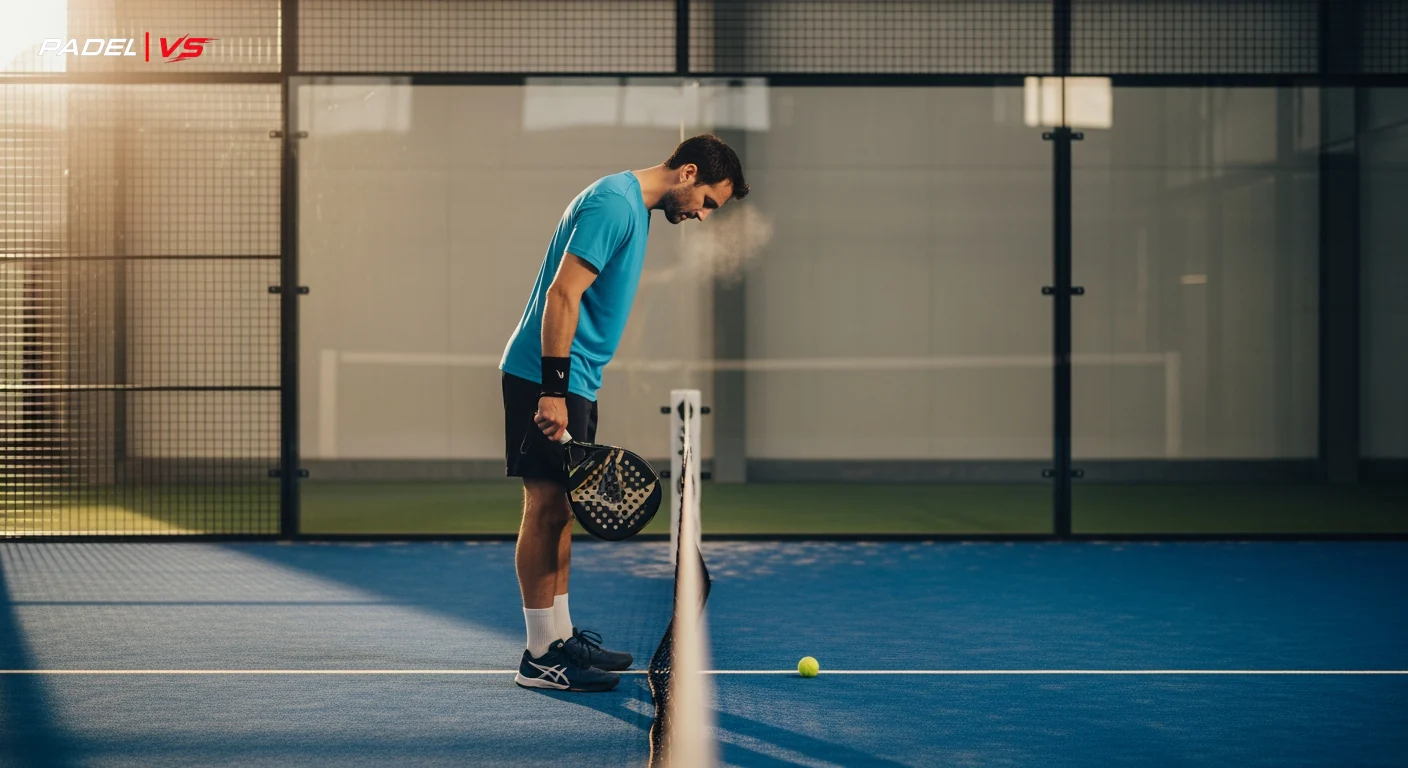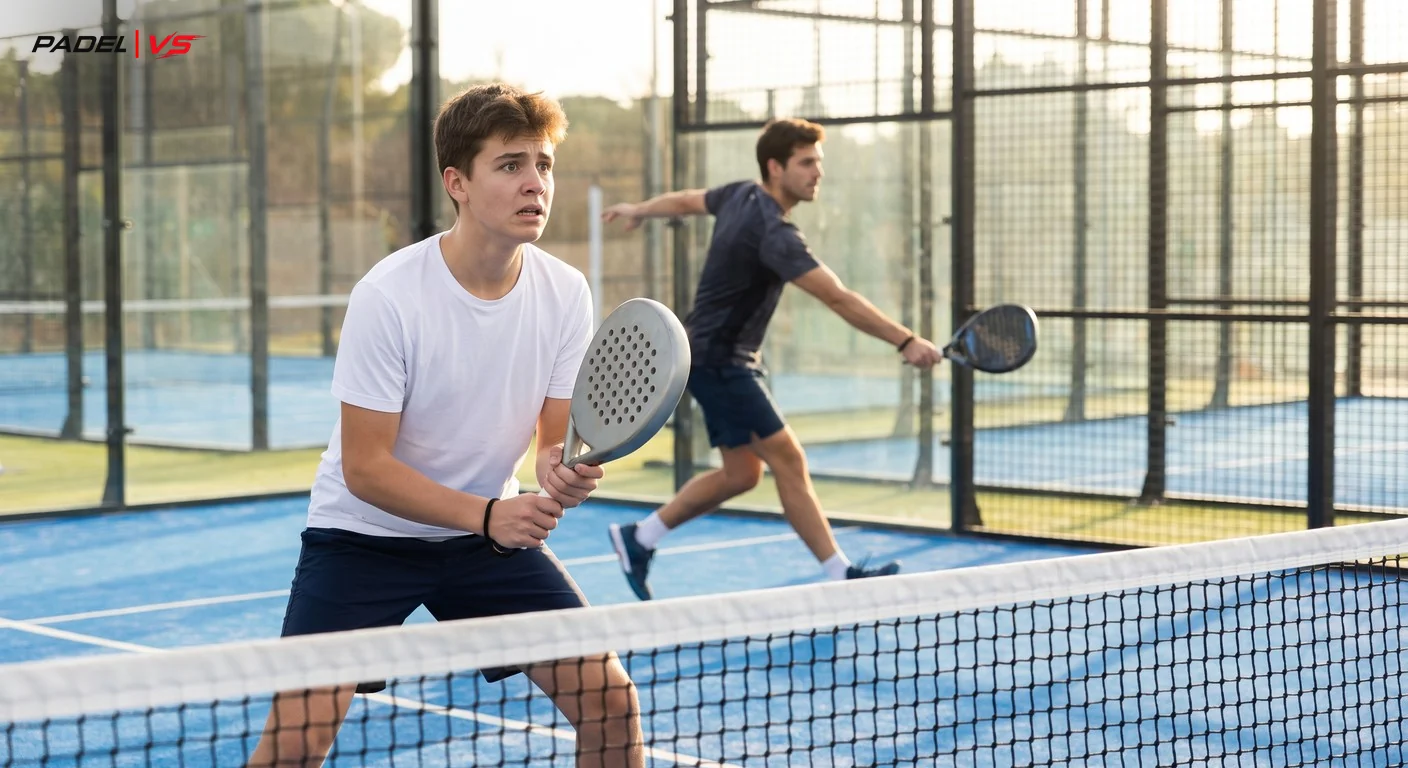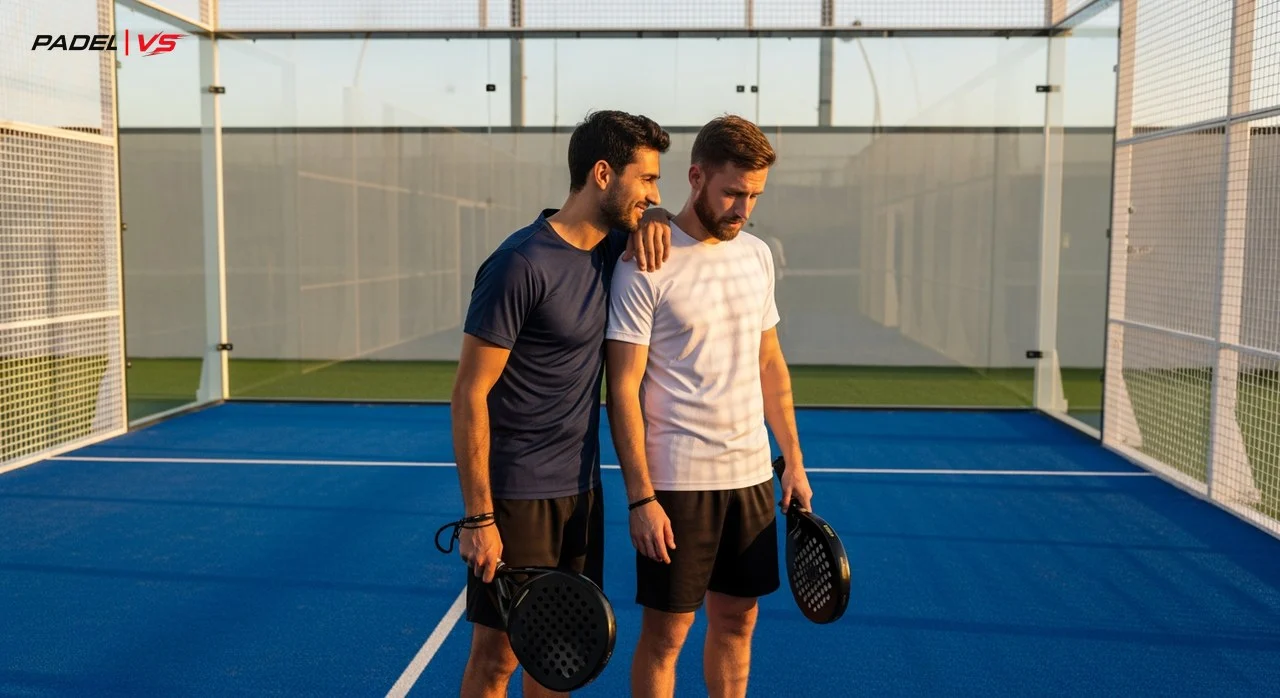
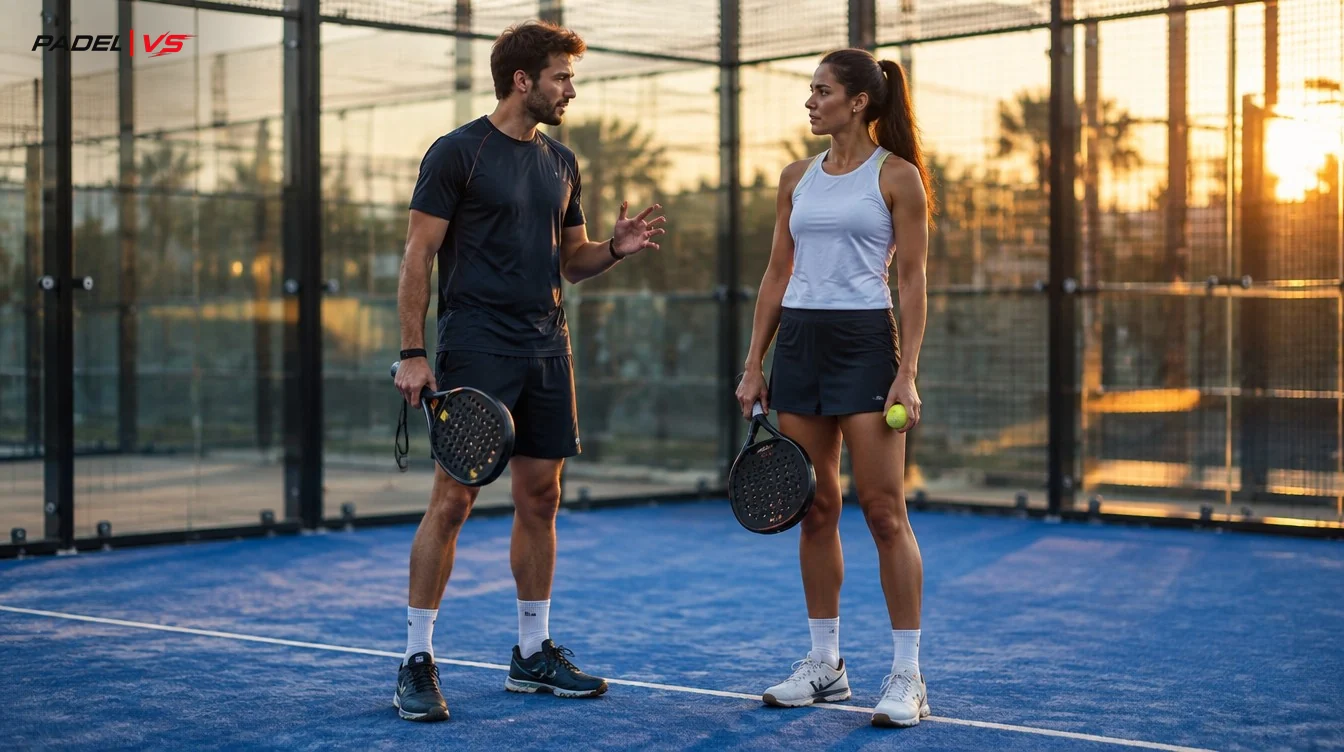
Some pairs win points with their racket. Others lose them with their mouth. Padel is a four-person sport played in 200 square meters, split by a net and boxed in by glass walls, which means communication can either be your sharpest tactical weapon or the exact reason your partner shanks an easy bandeja. This isn't opinion — it's something you can watch happen on any court, from Quinta all the way up to Primera.
Why padel demands a different kind of communication
Padel has a quirk that separates it from almost every other partner sport: points last an average of 4 to 15 seconds, but the time between points can stretch 15-20 seconds longer. That means you get very short, very specific windows for communication. It's not like beach volleyball, where there's time to shout a full strategy. And it's not like tennis doubles, where your partner is on the other side of the court, almost isolated from you.
In padel, your partner is less than three meters away from you for the entire match. They hear your breathing, see your body language, and — this is the key part — absorb your emotional state almost in real time. A frustrated "not again!" after a mistake doesn't just inform, it contaminates. In a sport where roughly 70% of points in Cuarta and Tercera categories are decided by unforced errors, poisoning your partner's mental state is basically handing away matches.
"You don't lose matches because of what your partner says. You lose matches because of how they say it and when."
The three critical windows of communication in padel
To understand when to talk and when not to, it helps to split the match into three communication zones. Each one has its own rules.
1. Before the point (the 5-8 seconds before the serve)
This is the only window where you can actually deliver tactical information without affecting immediate execution. This is where you decide: who serves, do we target the returner's body, is there a lefty whose backhand we should attack. This window is for planning together, not for correcting past mistakes.
2. During the point (tactical silence, except for signals)
The golden rule here is simple: almost no talking. The human brain can't process complex verbal instructions while executing a high-speed physical movement, like a reactive volley or a smash. The only acceptable things are one-word calls or signals: "mine!", "yours!", "wall!", "lob!". Anything longer interferes with motor processing.
3. After the point (the most dangerous zone)
This is where pairs break down — literally and mentally. The mistake even Segunda and Primera players make is using the first 2-3 seconds after losing a point to comment on the error. That's exactly the worst moment: your partner is still physically processing frustration and can't receive feedback constructively. The best pairs we've watched compete wait at least 8-10 seconds, walk back toward the service line, and only then — once their heart rate has dropped — make the necessary adjustment.
What to say and what to avoid: real examples from the court
The difference between a phrase that helps and one that hurts isn't the intention behind it, it's the phrasing itself. Here's a direct comparison of lines you'll hear on courts at every level:
| Situation | What breaks focus | What helps |
|---|---|---|
| After an unforced error | "How do you miss that?" | "It's fine, next one" |
| Opponent keeps attacking one player | "They're coming at you again, cover up" | "Let's swap positions for a point" |
| After winning a tough point | (silence or criticizing the opponent) | "That shot, exactly that" |
| Before a key point (30-40, deuce) | "Don't you dare miss this" | "Same as always, stay calm" |
| When your partner looks frustrated | Ignoring it or piling on pressure | "Breathe, one point at a time" |
Notice the pattern: the phrases that help are short, present-tense (not past), and oriented toward the next action. The ones that hurt almost always look backward, at the mistake, at something that can no longer be changed.
The language of signals: communication without words
Pairs competing consistently at Segunda and Primera level usually develop a system of hand signals, typically given by the back-court player before the serve, hand behind the back so the opponents can't see them. You don't need to be a professional to use this — it works just as well in Cuarta and Tercera.
- Closed fist: we're serving straight at the returner's body.
- Open palm facing down: let's slow the pace, play more crosscourt.
- Two fingers: let's attack the player on the right (or whichever side you define).
- Hand on chest: "I'm good, trust me," useful when your partner looks worried after your own mistake.
The exact code doesn't matter — each pair can invent their own — what matters is building the habit of communicating without words the opponent can also hear. Unlike most sports, in padel your opponents are less than 10 meters away and can literally hear your entire verbal strategy.
Communication by playing level
The way you communicate changes significantly depending on the pair's ELO level, because the speed of the game and the number of decisions per second change too. At PADEL VS we use a category system (Quinta <850, Cuarta 850-1000, Tercera 1000-1180, Segunda 1180-1350, Primera 1350-1550, Open ≥1550) that also helps explain what kind of communication fits each level.
| Category | Recommended communication style |
|---|---|
| Quinta (<850) | Frequent, explanatory communication: at this stage players are still learning to read the court, so talking more — with patience — helps both understand positioning. |
| Cuarta (850-1000) | Word count starts dropping; basic "mine/yours" signals and position adjustments between points get introduced. |
| Tercera (1000-1180) | Real tactical communication: deciding who to target, adjusting rotations, and silence during the point starts becoming the norm. |
| Segunda (1180-1350) | Established hand signals, minimal and extremely precise communication; every word counts. |
| Primera and Open (≥1350) | Near-silent communication during the point; verbal work concentrates entirely on side changes and 3-5 second adjustments before serving. |
Drills to train communication with your partner
Court communication doesn't improve by talking about it in the abstract — it's trained like any other shot. Here are drills you can add to your practice sessions:
- The silent match: play a full set saying absolutely nothing, using only pre-serve signals and one-word calls during the point. This forces you to develop non-verbal reading skills.
- The mandatory pause: set a rule that neither of you comments on a mistake until you've mentally counted to 10. You'll notice half of what you were about to say no longer makes sense after those 10 seconds.
- The three-signal code: before your next match, agree on just three hand signals (one for attack, one for defense, one for "I've got this") and drill them until they're automatic.
- Record and review: film a set from behind the court and later review together how many times communication helped versus how many times it distracted. It's eye-opening.
Common mistakes that destroy team focus
There are patterns that repeat at every level, from recreational players to those competing in serious qualifying tournaments:
- Correcting in the heat of the moment: talking immediately after a mistake, while your partner is still physically processing the frustration.
- One-way communication: one player always gives instructions while the other only receives them; this builds long-term resentment, even when the instructions are correct.
- Rhetorical questions: "why didn't you move up?" isn't a question, it's an accusation in disguise. The brain processes it as criticism, not information.
- Hostile silence: saying nothing also communicates. Silence after a mistake, paired with negative body language, can be just as damaging as a direct comment.
"The best padel pair isn't the one that never argues — it's the one that knows exactly when and how to speak so the other plays better, not worse."
How PADEL VS helps you find real on-court compatibility
A big part of in-match communication depends on playing with people at a similar level, where expectations around pace and communication actually match. At PADEL VS, by organizing matches and tournaments by ELO category (Quinta through Open), we make it easier to find partners and opponents whose rhythm and communication needs line up with yours. That — more than it seems — drastically reduces verbal friction during the match, because both sides tactically understand the same things without needing to explain everything out loud.
We're at an early stage building this community, starting in Cancún and expanding to other cities in Mexico over the coming months. If you're looking for a partner or an opponent at your level, open padelvs.com in your browser or message our WhatsApp bot to get matched into games that fit your category.
The one thing worth taking to your next match
Padel communication isn't about talking more, it's about talking better, at the right moment. Before the point to plan, almost silent during the point, and with a mandatory pause before commenting on any mistake. Master these three timing windows and you'll notice something curious: your partner starts missing less, not because their technique suddenly improved overnight, but because they can finally focus on playing instead of defending themselves from their own partner's comments.