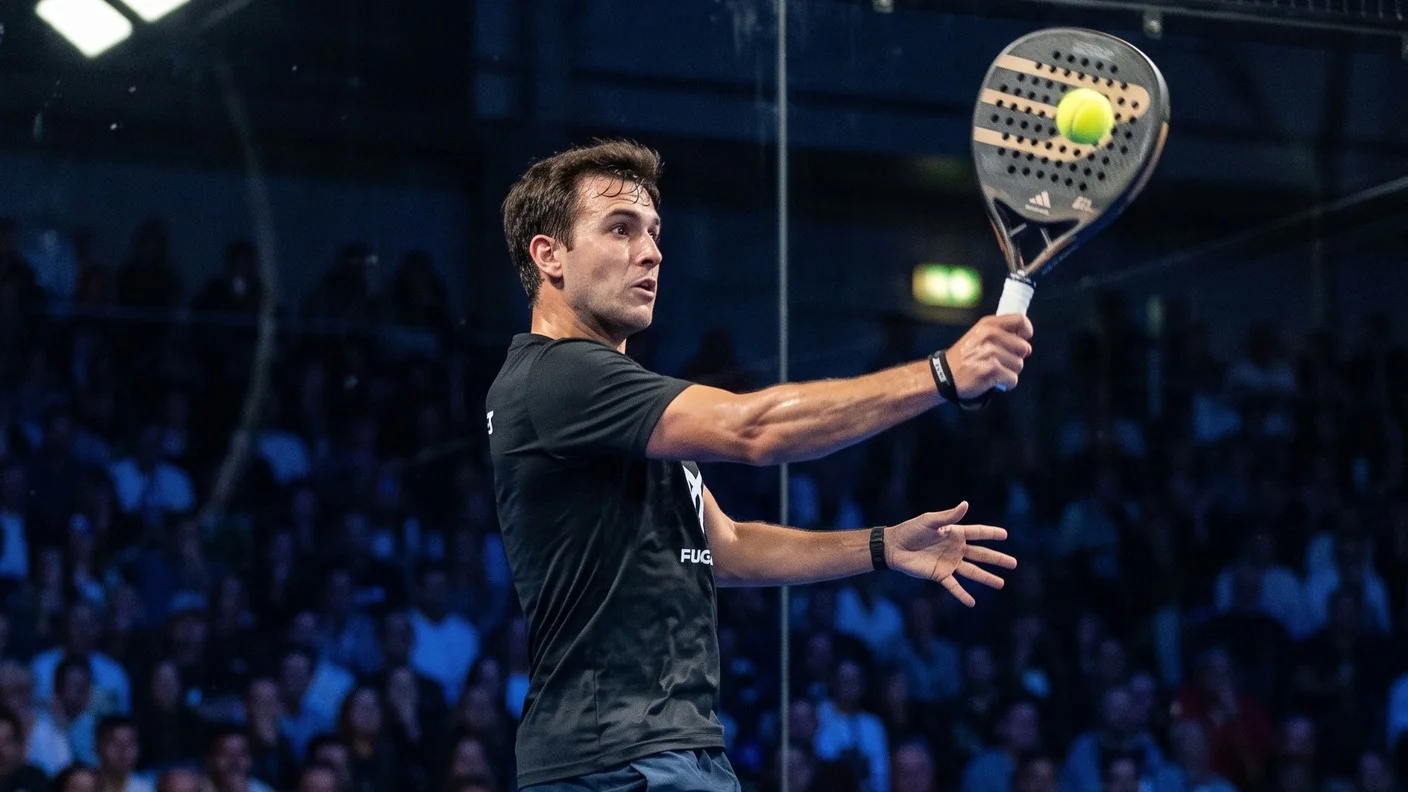

The frame of a padel racket is far more than the edge you grip around — it's the structural backbone that determines how much power transfers into every smash, how faithfully the racket responds in touch volleys, and how many wall impacts it survives before developing stress fractures. Choosing between carbon fiber, fiberglass, or a hybrid construction isn't a minor detail; it can be the difference between leveling up your game and fighting against your own equipment.
Why the Frame Material Actually Matters
Most players obsess over the hitting surface (the face of the racket), and understandably so — it's where the ball makes contact. But the frame carries three critical responsibilities that are easy to overlook:
- Lateral impact absorption: every time a ball ricochets off the glass wall and you collect it with the edge of your racket, the frame takes a significant lateral load. A stiffer material transmits that energy straight to your wrist and elbow; a more flexible one absorbs part of it.
- Torsional rigidity: when you make contact off-center — which happens constantly in padel — the frame either resists or allows the racket to twist. More rigidity means more predictable response on off-sweet-spot shots.
- Structural fatigue resistance: padel is played on a 10 × 20 meter court enclosed by glass and metallic walls. Bandejas, ceilings, and low-glass retrieves put continuous stress on the frame — not just the face.
With those three functions in mind, let's examine each material with technical precision.
Carbon Fiber: Maximum Stiffness, Maximum Demand on Technique
Carbon fiber — properly called CFRP (Carbon Fiber Reinforced Polymer) — is manufactured by weaving carbon filaments into layered sheets and bonding them with epoxy resin. The result is a material with an extraordinary strength-to-weight ratio that has transformed racket sports engineering over the past two decades.
Technical Properties of Carbon Frames
- Elastic modulus: between 70 and 150 GPa depending on the weave density (3K, 12K, or 18K). Higher modulus = stiffer frame.
- Frame weight contribution: a full carbon frame typically adds 15 to 25 grams to the total racket weight, which in padel ranges from 340 to 390 grams for competitive models.
- Vibration transmission: high. Without additional dampening, pure carbon transfers more vibration to the arm — a real concern for injury prevention.
Who Benefits from Carbon Frames?
Pure carbon frames reward players who have already developed consistent, repeatable mechanics — roughly from Tercera (1000-1180 ELO) upward in the PADEL VS classification system. Here's the key insight: stiffness only becomes an advantage when your swing is already grooved. If your contact point varies significantly from shot to shot, that rigidity amplifies errors rather than correcting them.
This is not just theory. Players in the Cuarta category (850-1000 ELO) who prematurely switch to pure carbon frames often report elbow discomfort within a few weeks of consistent play. The frame's lack of damping turns every mistimed hit into a vibration event that accumulates into tendon irritation over time.
"Carbon fiber doesn't give you power if your mechanics are broken. What it gives you is a clearer, more immediate signal of every mistake — which is information, not always comfort."
Carbon Frame Durability
This is where carbon has its Achilles' heel. While it's exceptionally stiff along its primary axis, it is brittle under localized lateral impact. A hard edge shot against the metallic frame of the padel court can cause invisible microfractures that compound over weeks. High-end carbon frames ($195-390 USD, $3,500-7,000 MXN aprox) use denser weaves (18K high-modulus) that improve impact resistance, but no pure carbon frame matches the resilience of fiberglass when it comes to repeated edge abuse on glass and metal walls.
Fiberglass: The Durability and Control Champion
Fiberglass — GFRP, or Glass Fiber Reinforced Polymer — is the original material of competitive padel. Before carbon became affordable for mid-range rackets, virtually every padel racket was built with fiberglass frames and faces. It remains highly relevant today, and not out of nostalgia.
Technical Properties of Fiberglass Frames
- Elastic modulus: 10 to 45 GPa — significantly lower than carbon, making it inherently more flexible.
- Impact absorption: excellent. Frame flex acts as a natural dampener, reducing peak vibration transmitted to the forearm.
- Resilience: fiberglass can deform slightly under load and recover its original shape, which is why it handles repeated wall strikes far better than carbon.
- Weight: slightly heavier than carbon by volume, but the real-world difference in a racket frame is minimal — typically 3 to 7 grams.
Who Benefits from Fiberglass Frames?
Players in the Quinta (<850 ELO) and Cuarta (850-1000 ELO) categories gain the most from fiberglass frames. The frame's natural flex creates a longer dwell time at contact — the ball stays on the hitting surface a fraction longer — which players intuitively experience as better control and a more forgiving response on off-center hits.
Beyond beginner and developing players, anyone with a history of lateral epicondylitis (tennis elbow) or wrist tendinitis should prioritize fiberglass frames regardless of their skill level. Biomechanics research in racket sports consistently shows that more flexible frames reduce peak forearm vibration by meaningful margins — estimates in the tennis literature suggest reductions of 25-35%, and padel's shorter, stiffer swing makes this even more relevant.
Fiberglass Frame Durability
This is where fiberglass outperforms carbon decisively. A well-built fiberglass frame handles lateral hits, wall scrapes, and the general punishment of padel court life that would leave a pure carbon frame cracked or microcracked. Entry and mid-range rackets with fiberglass frames ($44-139 USD, $800-2,500 MXN aprox) are notoriously long-lived — which makes them ideal for players who are still developing the wall-shot control that prevents edge impacts.
Hybrid Frames: Engineered Balance or Marketing Blur?
Hybrid frames combine carbon and fiberglass layers in varying proportions and configurations. There is no industry standard — every manufacturer has its own recipe. What matters is understanding the logic behind the most common configurations so you can evaluate any specific racket accurately.
Common Hybrid Configurations
| Configuration | Description | Playing Effect |
|---|---|---|
| Carbon exterior + fiberglass core | Visible carbon layer on the outer frame surface, fiberglass as the structural substrate | Surface stiffness with internal dampening. Good transition racket for developing players moving toward Tercera. |
| Fiberglass exterior + carbon reinforcement at throat | Generally flexible frame with targeted carbon stiffening at the face-to-frame junction | Protects the highest-stress point in the racket while keeping overall feel forgiving. |
| Multi-layer carbon (3K + 12K alternating) | Different carbon weaves managing rigidity along different axes | Advanced engineering for Primera (1350-1550 ELO) and Open (≥1550 ELO) players requiring specific flex profiles. |
Hybrids in Real Playing Conditions
For a player solidly in the Tercera category (1000-1180 ELO) who is developing their net game and wants more smash power without giving up the control needed for a precise globo or a touch volley, a hybrid frame with a carbon exterior layer is typically the right call. You get the stiffness sensation and power potential of carbon without paying the full price in vibration and durability that pure carbon demands.
Hybrid rackets typically range from $83-278 USD ($1,500-5,000 MXN aprox), making this the widest price category in the market — and the one with the most quality variance. Read manufacturer specifications critically: many rackets marketed as "carbon" have a single cosmetic layer of carbon weave that contributes nothing structural. A racket that is 85% fiberglass with a 15% carbon facing is not a carbon racket. It's a fiberglass racket with a carbon finish.
"In padel equipment marketing, 'carbon' often describes the aesthetics of a racket, not its engineering. The fiber percentage and its structural location are what actually determine how the racket plays."
Direct Comparison: Carbon vs Fiberglass vs Hybrid
| Characteristic | Pure Carbon | Fiberglass | Hybrid |
|---|---|---|---|
| Frame rigidity | ⭐⭐⭐⭐⭐ | ⭐⭐ | ⭐⭐⭐ |
| Touch and control | ⭐⭐⭐⭐ | ⭐⭐⭐⭐⭐ | ⭐⭐⭐⭐ |
| Vibration dampening | ⭐⭐ | ⭐⭐⭐⭐⭐ | ⭐⭐⭐ |
| Resistance to lateral impacts | ⭐⭐⭐ | ⭐⭐⭐⭐⭐ | ⭐⭐⭐⭐ |
| Smash power output | ⭐⭐⭐⭐⭐ | ⭐⭐⭐ | ⭐⭐⭐⭐ |
| Ideal for level | Tercera to Open | Quinta to Cuarta | Cuarta to Segunda |
| Price range | $165-390 USD ($3,000-7,000 MXN aprox) | $44-139 USD ($800-2,500 MXN aprox) | $83-278 USD ($1,500-5,000 MXN aprox) |
Variables the Frame Material Doesn't Control
Frame material is crucial, but it interacts with several other structural elements that also affect how your racket plays in real padel conditions:
Racket Shape
A round-shaped padel racket with a carbon frame behaves very differently from a diamond-shaped carbon racket. The shape determines where the sweet spot sits (centered in round shapes, higher in diamond shapes), which in turn affects how the frame distributes stress from each impact. Diamond shapes concentrate stress near the top of the frame — demanding more structural integrity from the carbon or hybrid construction at that point.
Core Material
The frame and the core work as a system. A hard EVA core paired with a pure carbon frame creates the stiffest possible racket construction — excellent for players at Primera (1350-1550 ELO) and Open (≥1550 ELO) who generate their own power and need maximum feedback. A soft foam core with a fiberglass frame creates the most forgiving racket possible — ideal for Quinta and Cuarta players building their game. Mismatching these (hard EVA + fiberglass frame, or soft foam + full carbon frame) often produces unpredictable results.
Frame Width
Wider frames (38-42 mm) distribute lateral wall impacts more effectively across a larger cross-section. Narrower frames (32-36 mm) concentrate stiffness more precisely. In padel specifically — where wall and glass contact is integral to the game, not accidental — frame width is a meaningful specification that deserves attention alongside the material choice.
A Three-Question Framework for Making Your Decision
- What is your current playing level? If you're in Quinta or Cuarta, start with fiberglass or a quality hybrid. There is no real performance benefit to pure carbon frames before your mechanics are consistent — only additional cost and injury risk.
- Do you have any history of elbow or wrist issues? If yes, fiberglass or a fiberglass-dominant hybrid is the right call at any level. The vibration reduction is real and clinically meaningful over a full season of play.
- Is your game built around the back wall or the net? Net-based players hunting power on the bandeja and smash benefit from more carbon. Back-court players prioritizing consistent globos and controlled low-glass retrieves will be better served by fiberglass or a hybrid that leans toward flex.
How Your PADEL VS ELO Makes This Decision Easier
One of the practical benefits of tracking your game through PADEL VS is that your ELO score gives you a precise, objective anchor for equipment decisions. "Intermediate player" is too vague to be useful when comparing racket materials. But "I'm at 1,050 ELO in Tercera, I'm developing my net game and currently struggling with back-wall shots on my backhand side" — that's specific enough to make a targeted recommendation.
You can access your PADEL VS profile and track your real-time ELO at padelvs.com in your browser, or through the Telegram Mini App at @padelvsbot. We're building the platform from Cancún outward, and as the community grows, the data from real match results will continue to sharpen the picture of what equipment profiles work at each competitive level.
Conclusion: There Is No Best Material — Only the Right One for Your Game
Pure carbon maximizes power and rigidity for players whose technique can consistently exploit that stiffness. Fiberglass delivers durability, vibration absorption, and a forgiving response for players still building their mechanics. Hybrid frames fill the space between — and the quality of that filling depends entirely on the specific engineering choices the manufacturer made, not just the presence of carbon fiber in the description.
The next time you're standing in front of a display of padel rackets, look past the color and the branding on the handle. Find the frame specification, ask what percentage of each material is structurally active (not cosmetic), and map that against your level, your injury history, and the way you actually play the game. That's the difference between buying a racket and choosing one.