Most players fear the side glass. They see it as a trap that pulls them out of position, or the place where points go to die. But players at Segunda and Primera category level know something the rest of the court doesn't: the glass isn't an obstacle, it's an accomplice. Mastering the side-wall rebound unlocks angles that simply don't exist on a tennis court, and that knowledge can be the difference between staying stuck in Tercera and climbing into Segunda.
The Physics Behind the Glass: Why the Wall Isn't Your Enemy
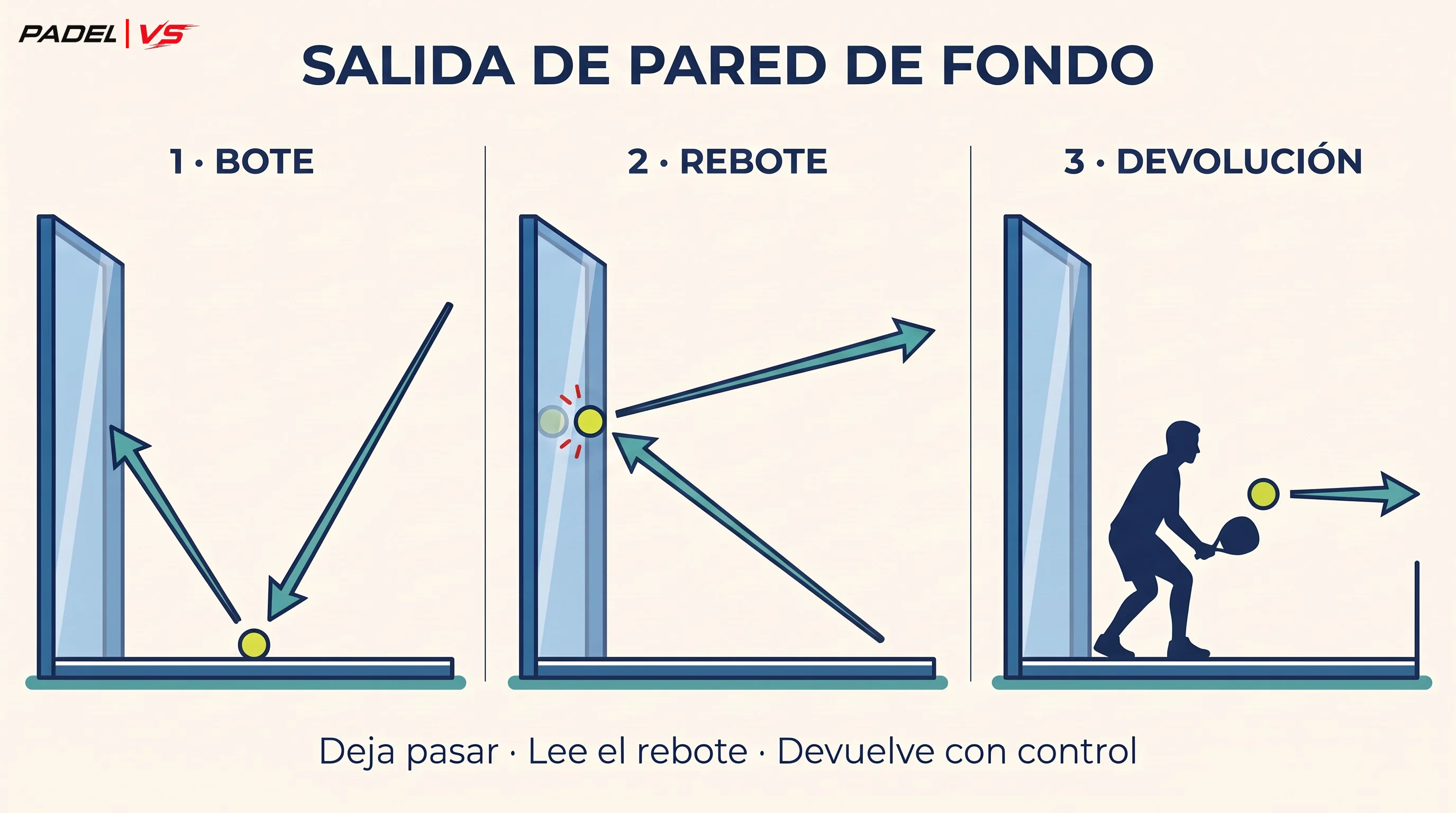
Before talking technique, you need to understand the material. The glass panels on a standard padel court (20 x 10 meters) are tempered glass, roughly 10-12 millimeters thick, mounted on an aluminum frame. Unlike chain-link fencing that absorbs energy unevenly, glass returns the ball following a nearly perfect physical law: the angle of incidence equals the angle of reflection. That means, barring the spin you yourself put on the ball, the rebound is predictable.
The back side-glass typically stands around 3 meters high, while the side glass near the net is much lower (roughly 1 meter) and completes the enclosure with metal mesh up to the same 3-meter total height. That height difference changes how the ball behaves depending on where it strikes: closer to the back, rebounds come off clean and high; near the net, where there's less glass, rebounds tend to stay low and fast.
The glass doesn't take the point away from you. It hands it to you — if you read it before your opponent does.
The Three Moments to Attack With the Side Glass
1. The Offensive Wall Exit (When You're Under Attack)
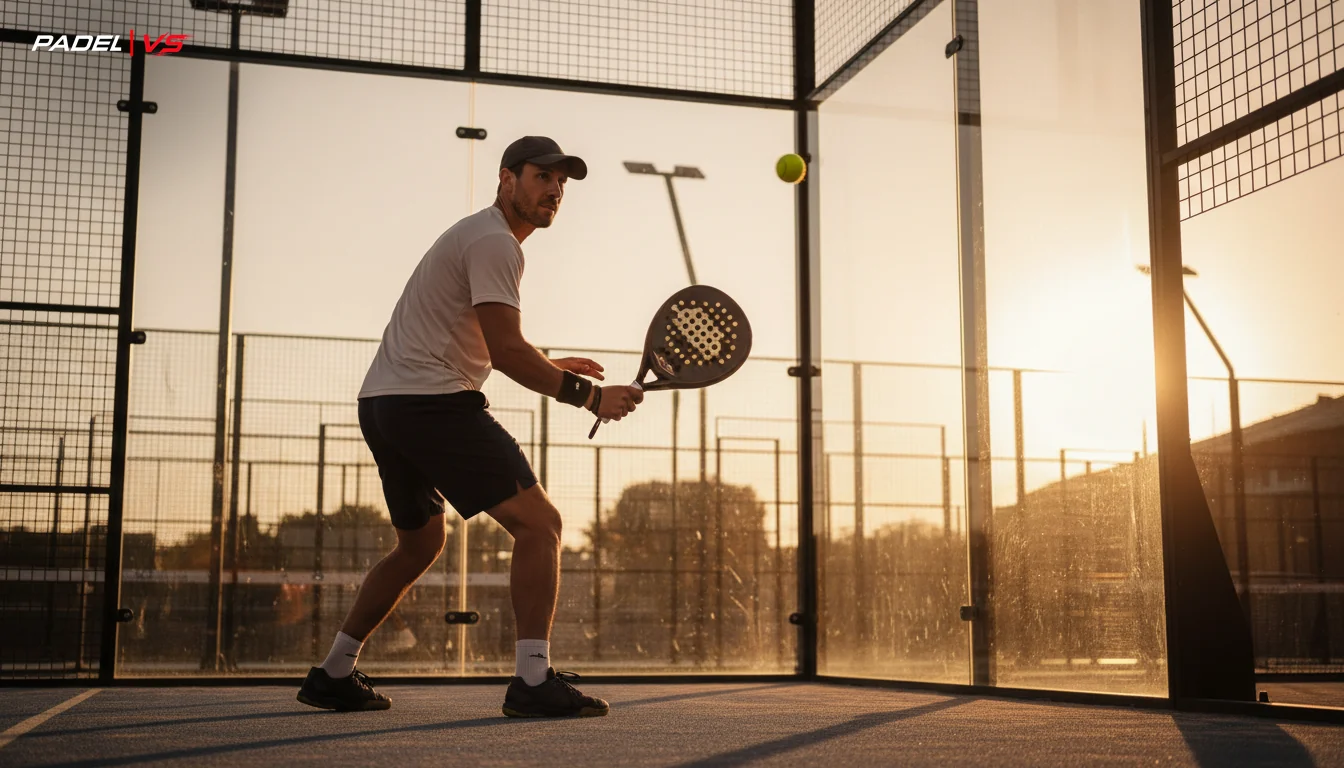
This is the most common scenario: your opponent sends a deep lob or a smash that bounces on your side and then hits the side glass. The typical mistake is blocking the ball the instant it leaves the glass, sending back a purely defensive lob with no intention behind it. The offensive play is different: position yourself about 50-70 centimeters from the glass (not pressed against it), let the ball complete its rebound trajectory, and at the highest point of its post-glass path, strike it with an open racket face and a touch of topspin to send it crosscourt and low over the net.
The technical key is timing: hitting too early (right as it leaves the glass) leaves you with no angle; hitting too late forces you back into defense. The sweet spot is usually 30 to 50 centimeters after the ball separates from the glass.
2. The Corner Smash (Where Two Walls Meet)
When a lob drops into the corner where the side glass meets the back glass, the ball rebounds twice at different angles before reaching you. This combination — often called "the wedge" among coaches — is the most feared shot for Cuarta and Tercera players because it demands reading two rebounds instead of one. For a trained player, though, it's a direct invitation to smash: the double reflection usually produces a slower, higher ball than the opponent expects, perfect for stepping in and finishing with authority.
The secret is not treating the first rebound as the final one. Watch the side glass first, calculate where it sends the ball, and only then adjust your position for the second contact off the back wall.
3. The Post-Glass Víbora (Cross-Court Flat Shot)
When your opponent attempts a very tight angle and the ball ends up hitting your own side glass from an aggressive angle, you get a window to play a víbora: a flat, low-spin shot that uses the residual speed of the rebound to send the ball crosscourt and skidding low. It's a high-risk, high-reward shot that typically shows up at Segunda, Primera, and Open level, where players already trust their read on the rebound and are looking to end the point instead of rebuilding it.
Positioning and Footwork: The Part Nobody Explains
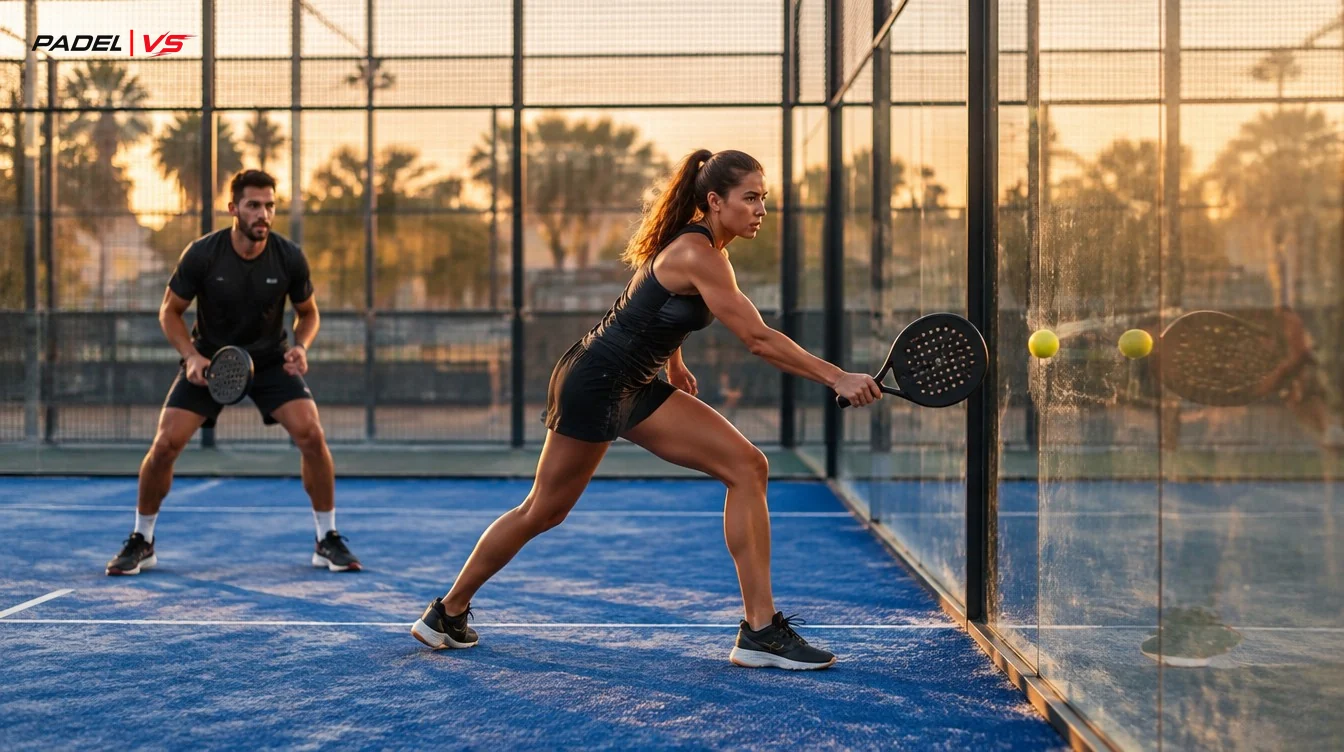
The number-one mistake at every level — including Tercera and Segunda — is standing still waiting for the rebound instead of moving with it. The side glass demands constant lateral footwork: short steps, bent knees, and body weight ready to push forward at the moment of contact. The table below breaks down how to adjust your positioning depending on the type of rebound you're facing:
| Situation | Distance from Glass | Recommended Posture | Suggested Shot |
|---|---|---|---|
| Floor-then-glass bounce | 60-80 cm | Sideways stance, racket at chest height | Crosscourt bandeja or offensive lob |
| Glass-then-floor bounce | 40-60 cm | Tighter stance, knees bent | Víbora or low topspin volley |
| Double wall (corner) | 80-100 cm until second rebound is read | Wait, then explosive step-in | Finishing smash or bandeja |
Common Mistakes When Playing the Side Glass
- Standing too close to the glass: leaves you no reaction time and no room for a full swing.
- Watching the wall instead of the ball: your eyes need to track the ball the entire way, not visually anticipate the rebound point.
- Hitting before the rebound finishes: the ball keeps accelerating or decelerating after glass contact; hitting too early ruins control.
- Prioritizing power over placement: a well-placed wall shot at 100 km/h wins more points than a poorly placed one at 140 km/h.
- Not adjusting grip: for wall-exit shots, a continental grip that rotates slightly toward semi-western at contact generates the topspin you need.
How to Train This Shot
The only way to automate reading the side glass is conscious repetition. A simple and highly effective drill: stand three meters from the side glass and feed yourself balls against it, varying the throwing angle. Do 20 balls per side, two or three times a week, focusing only on timing (not power). With a partner, the "wall rondo" drill — where both players take turns forcing the other to play off the side glass — accelerates the learning curve dramatically.
If you want professional help speeding up the process, a technical coaching session focused specifically on wall play typically runs $33-67 USD ($600-1,200 MXN aprox) per hour, depending on the city and the coach's experience. It's worth investing in at least three or four sessions if the side glass is still your weak spot.
To find hitting partners at a similar level to practice these wall drills, you can use the PADEL VS WhatsApp bot or open the Mini App inside Telegram via @padelvsbot to coordinate practice matches with players in your own ELO category — something that matters a lot, because drilling this shot against someone far above or below your level distorts the real rebound speed you'll face in competition.
What Category You Should Have This Mastered By
In PADEL VS's category system, basic side-glass management — surviving without giving away the point — should already be present by Cuarta (850-1000 ELO). But turning it into a real offensive weapon, capable of generating angles that are impossible to cover, is a trait that separates Tercera (1000-1180 ELO) from Segunda (1180-1350 ELO): by Segunda, a player isn't just expected to defend the glass well, but to actively seek out wall situations to attack from. At Primera (1350-1550 ELO) and Open (≥1550 ELO), the side glass stops being an occasional resource and becomes a structural part of the game plan, used deliberately to open up space before the finishing smash.
Conclusion
The side glass stops being scary the exact moment you stop seeing it as a wall and start seeing it as a second opponent you can read. The physics of the rebound are constant, predictable, and — above all — trainable. Next time a ball heads toward the side glass, instead of backing away in a panic, ask yourself: what angle is this wall about to hand me?
The best padel players don't beat their opponent. They beat the rebound.