
There's a moment when a niche sport stops being something enthusiasts quietly enjoy and starts being something your coworker, your neighbor, and your dentist all bring up within the same week — and padel has officially reached that moment. The padel pop, as players and industry observers have started calling it, is the cultural tipping point where a sport transitions from specialty clubs to sold-out court reservations, waiting lists for memberships, and Instagram feeds full of impossible wall-bounce rallies. Understanding why padel specifically hit that threshold — and why it's sticking — tells you a lot about how we live, socialize, and move in 2026.
What exactly is the padel pop?
"Padel pop" isn't a technical term — it's cultural shorthand for the moment padel crossed over. It describes the phase when a sport goes from "something your Spanish colleague plays on weekends" to the activity generating waitlists, sponsor wars, and the kind of evangelical enthusiasm typically reserved for new restaurants or streaming shows. That moment has arrived, and it arrived hard.
To understand the scale: in cities like Monterrey, Guadalajara, and Cancún, clubs that opened with two or four courts are now expanding to complexes of eight, ten, or twelve. The sport that most Mexicans had never heard of four years ago now has dedicated academies, structured tournaments, and a growing wave of players who have traded their gym memberships for court time. The padel pop isn't hype — it's infrastructure changing on the ground.
And it's not just a Mexico story. Across Europe — particularly Spain, Italy, Sweden, and the UK — padel has become the defining recreational sport of the decade. The World Padel Tour and Premier Padel have grown their digital audiences season over season. Global brands that previously focused exclusively on tennis are now designing full padel-specific product lines. The numbers tell a clear story: this sport is no longer a niche.
"Padel didn't go viral because someone pushed it. It went viral because once you play it, you immediately need to tell everyone you know."
The real reasons padel exploded — not the generic ones
Every trending sport article will tell you "it's easy to learn and fun to play." That's true of dozens of sports that never became mainstream. The padel pop has specific, structural reasons behind it that are worth examining honestly.
The learning curve is uniquely forgiving
Padel is played on a court measuring 20 x 10 meters, enclosed by glass walls and metal mesh. The padel racket — called a pala — is solid (no strings), measures between 45 and 47 centimeters in length, and weighs between 330 and 400 grams depending on the model. The ball is played underarm on the serve, and the enclosing walls are in play throughout the rally.
That last point is key: the walls aren't obstacles — they're tools. A beginner who shanks a shot doesn't lose the point immediately; the ball might come off the glass and stay in play. This creates a feedback loop of early competence that tennis simply cannot offer. A first-time padel player can sustain a real rally within minutes. That immediate sense of "I can actually do this" is addictive in a way that fundamentally changes adoption curves.
It is structurally, inescapably social
Padel is always played as doubles. Four people, one court, 90 minutes. There is no solo padel practice, no headphones-in-treadmill equivalent. Every session is automatically a social event, which means every session builds relationships, inside jokes, and the kind of low-stakes competition that creates genuine connection. In a cultural moment where individual fitness dominates — solo runs, gym machines, app-guided workouts — padel offers something people were missing without quite knowing how to name it: community with stakes attached.
The infrastructure math works in its favor
A standard padel court requires approximately 200 square meters including perimeter clearance. A regulation tennis court needs around 650 square meters. That ratio — roughly 1:3 — means a space that previously housed two tennis courts can fit six padel courts. For operators in expensive urban real estate markets like Mexico City or Monterrey, this changes the entire investment calculation. More courts per square meter means more revenue potential, which means more investment, which means more courts get built. The supply creates the demand, and the demand validates the supply.
The sport was accidentally designed for the visual internet
Glass walls. Impossible angles. Rallies that stretch 20, 30, 40 shots as players use every surface of the enclosure. Palas with graphic designs that look like modern art. The sport's physicality is spectacular in a way that compresses beautifully into a 15-second clip. Padel didn't have a social media strategy — it is a social media strategy, built into its DNA. When players share their matches, they're creating organic content that happens to be genuinely watchable. That loop of share → watch → try → share is the engine of the padel pop.
The Mexican context: why here, why now
Mexico has deep roots in racket sports. Tennis had its mass-popularity moment in the 1980s and 90s. Frontón and jai alai carry genuine cultural weight. Padel didn't land on barren ground — it landed on soil that was already prepared for a racket sport with competitive structure.
What shifted recently is critical mass. When a sport reaches a certain density of courts in a city, its growth becomes self-sustaining: more visibility drives more first-timers, more first-timers fill courts, full courts signal investment opportunity, new courts get built, visibility increases further. Cancún, Mérida, Monterrey, and parts of CDMX have crossed that threshold. Clubs with LED lighting for night play, structured academies, and regular tournaments — the kind of infrastructure that previously existed only in Spain or Argentina — are now operating across Mexico.
The player profile is also diversifying rapidly. The early adopters were often executives in their late 30s and 40s with flexible schedules and disposable income for sports equipment. That profile still exists, but alongside it now you'll find university students who discovered the sport on TikTok, couples using it as a shared weekend activity, and clubs running junior programs for kids as young as eight. Democratization is a core feature of the pop phase.
The competitive structure: what gives padel its staying power
What separates padel from a pure lifestyle trend is its competitive depth. This isn't a sport where you play recreationally for a few months and then lose interest because there's nowhere to go. Padel has a structured ranking system, defined categories, and a tournament ecosystem that gives players a reason to keep improving indefinitely.
At PADEL VS, the competitive padel platform we're building in Mexico — currently focused on Cancún with plans to expand to more cities — we use an ELO-based rating system with clearly defined categories. These aren't generic labels like "beginner" or "advanced"; they're specific thresholds with names and meaning:
| Category | ELO Range | What it means |
|---|---|---|
| Quinta | < 850 | Where everyone starts. Learning without pressure. |
| Cuarta | 850 – 1,000 | You understand the game. Working on consistency. |
| Tercera | 1,000 – 1,180 | Real competitive padel. Tactics start to matter. |
| Segunda | 1,180 – 1,350 | One step from the top. Solid, consistent technique. |
| Primera | 1,350 – 1,550 | Amateur elite. Very few reach this level. |
| Open | ≥ 1,550 | The highest category. No ceiling on level. |
This kind of structure is precisely what turns a trending sport into a lasting sport. When you have a number that tracks your progress, a category to aspire to, and opponents waiting at your exact level, casual participation becomes personal investment. The padel pop brought people in; the competitive structure is what keeps them.
What does it cost to get into padel?
One of the genuinely underappreciated aspects of padel's growth is its accessible entry point. You don't need to buy anything to start — most clubs rent rackets for the equivalent of $3–$6 USD per session. But if you decide to commit, here's an honest breakdown of what the investment looks like:
- Entry-level pala: $44–$83 USD ($800–$1,500 MXN approx). Fiberglass construction, larger sweet spot, forgiving on off-center hits. Perfect for Quinta and early Cuarta players.
- Mid-range pala: $83–$194 USD ($1,500–$3,500 MXN approx). Hybrid materials, better control-power balance. Suitable for Cuarta through mid-Tercera.
- Premium carbon pala: $194–$389 USD ($3,500–$7,000 MXN approx). Full carbon frame and face, maximum control, less forgiving. For Segunda and above who already know exactly what they want.
- Padel balls: A tube of three balls runs $4.50–$8.30 USD ($80–$150 MXN approx). Replace them every 3–5 intense sessions — dead balls completely change how the game feels.
- Padel-specific shoes: $67–$167 USD ($1,200–$3,000 MXN approx). Not optional if you're playing more than twice a week. The herringbone sole grips synthetic grass in lateral movements that running shoes simply weren't designed for.
Compare that to golf (starter set: $400–$800 USD), tennis (racket plus court fees plus lessons), or skiing (equipment plus resort access), and padel's financial accessibility becomes another structural advantage. The barrier to entry is low enough that "trying it" doesn't require a significant commitment, which feeds the pop dynamic.
Community: the dimension the trend pieces miss
Most coverage of the padel pop focuses on numbers: courts built, markets entered, revenue projected. What that coverage misses is what's actually happening on those courts between four people who showed up for a 90-minute session.
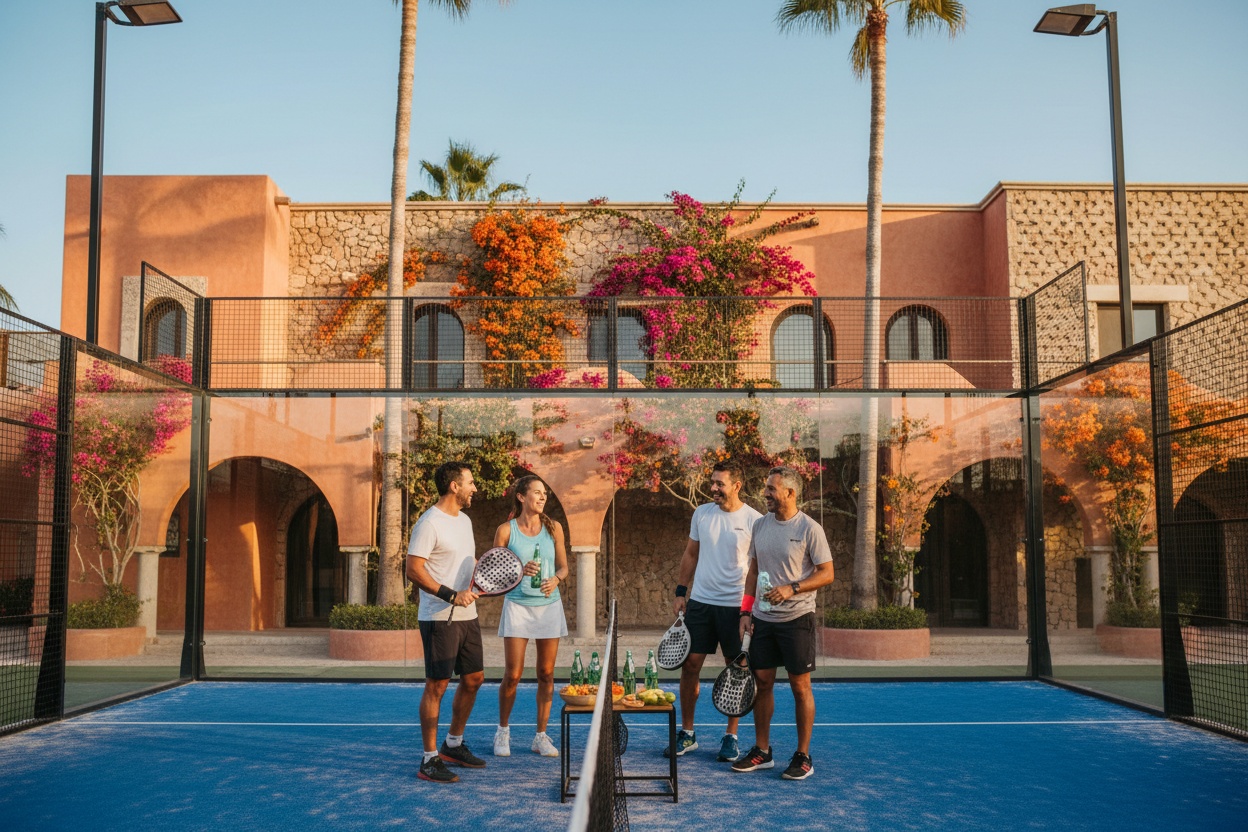
Padel clubs are quietly becoming social infrastructure. They're replacing — or at least complementing — bars, gyms, and coffee shops as spaces where real relationships get built. There's something about the intimacy of a glass-enclosed court, four people in a 200-square-meter space with nowhere to hide and a score being kept, that generates a different quality of connection than most recreational activities offer.
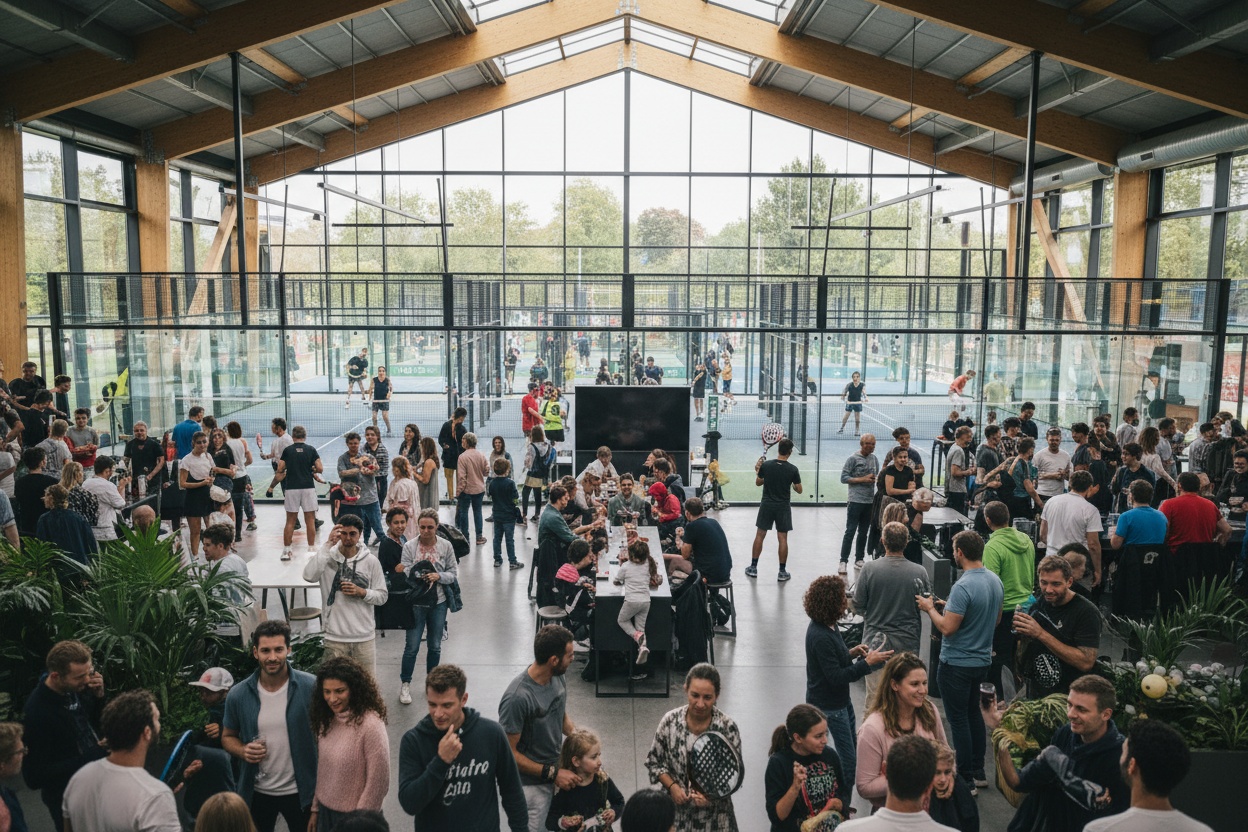
Tournament days are where this becomes most visible. It doesn't matter whether you're playing in Quinta or Primera — the atmosphere is the same. The nerves before a match, the dispute over whether that ball caught the glass or the metal, the debrief over a drink after a match that went to a third set. These are the experiences that create loyalty not just to the sport but to the specific club, the specific community, the specific group of people who showed up on the same Saturday morning you did.
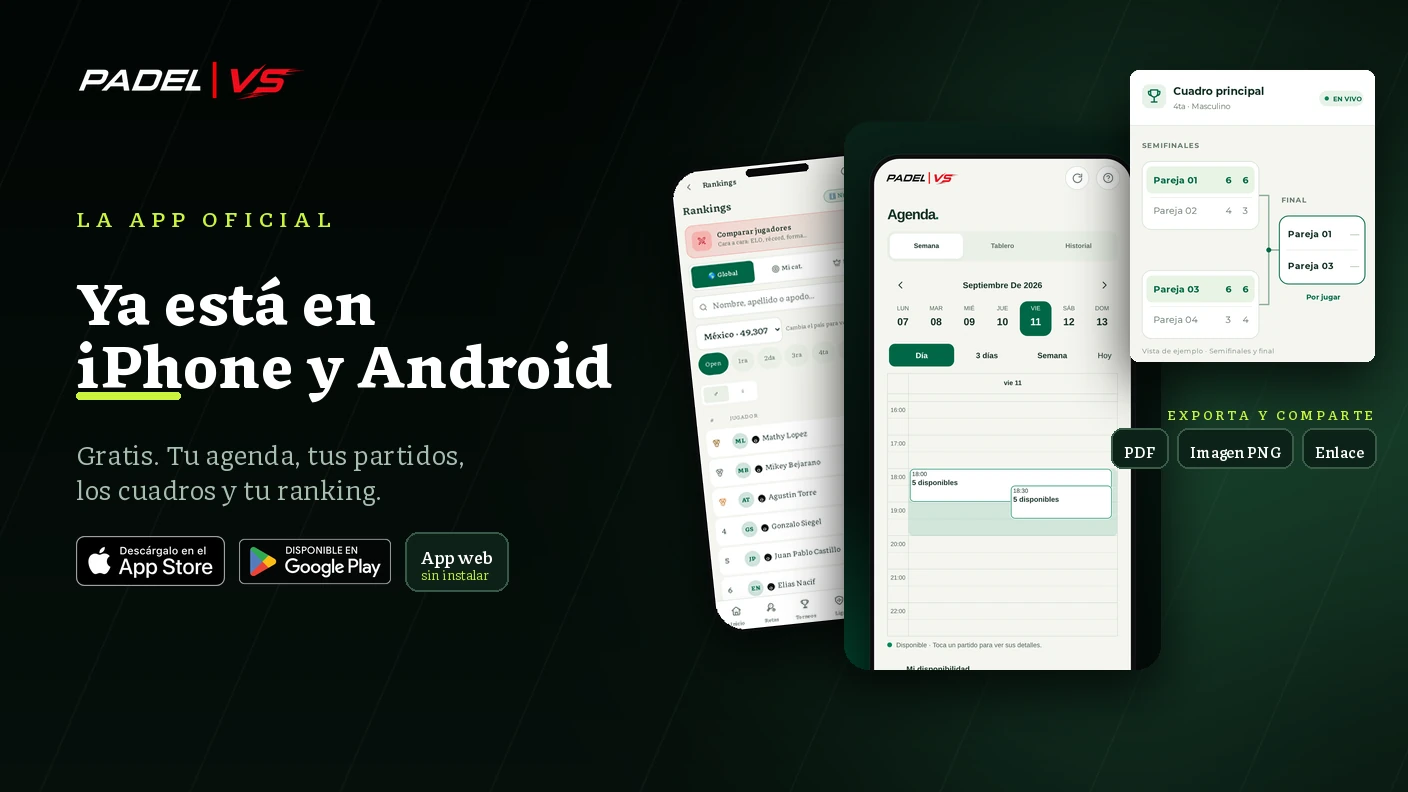
At PADEL VS, this community dimension is central to what we're building. We're in early stages, growing our community in Cancún, but the vision is clear: every player in Mexico should have access to tournaments at their exact level, opponents who push them, and a platform to track their progress over time. You can access PADEL VS through the web at padelvs.com, via the Telegram Mini App with @padelvsbot, or through our WhatsApp AI bot — no app download required.
"Padel isn't just a sport. It's an excuse to build something cities desperately need but rarely create: real community, face to face, with a scoreboard involved."
Is padel a passing trend or a permanent shift?
The question deserves a direct answer. Sports trends have a history of flaring and fading — racquetball in the 1980s, spinning in the 2000s, certain fitness formats in the 2010s. Why would padel be different?
The difference is structural depth. Racquetball doesn't have a global professional circuit with legitimate prize money and media rights. Spinning doesn't have national federations in 90+ countries or an Olympic pathway under discussion. Padel has decades of competitive history in Spain and Argentina, a global professional tour, national federations, certified coaches, and a ranking system that gives recreational players a reason to invest in improving for years, not months.
When the initial hype stabilizes — and it will, as it always does — what remains won't be an empty court and a forgotten pala in a closet. It'll be a mature sport with active clubs, regular tournaments, generational players, and communities built over years of shared wins and losses. The padel pop is the beginning of something, not the peak of it.
Your practical starting guide
If you've read this far and haven't yet stepped on a padel court, here is a concrete action plan:
- Session one: Find a club in your city offering introductory lessons or court rental with a coach. Expect to pay $11–$22 USD ($200–$400 MXN approx) per person for a 60–90 minute intro session. Rent the racket — don't buy yet.
- First four weeks: Play twice a week. Focus on three things only: the serve (it's underhand, easier than tennis), the forehand groundstroke, and learning to read the back wall. Everything else can wait.
- Six weeks in: If you're hooked (you will be), invest in padel-specific shoes. This is the first purchase that matters for your joint health — lateral movements on synthetic grass in running shoes is a recipe for ankle issues.
- Three months: Buy your first entry-level pala. By this point you'll have a sense of whether you prefer a softer, more control-oriented feel or something with more power. That preference should guide your choice.
- Six months: Enter your first tournament. Start in Quinta — regardless of how well you think you play, your first competitive match will teach you more than thirty practice sessions. Register at padelvs.com or message the PADEL VS WhatsApp bot to check available tournaments in your city.
The padel pop isn't an accident, a marketing campaign, or a temporary alignment of trends. It's the result of an exceptionally well-designed sport meeting the social and cultural conditions of 2026: compact for urban spaces, inherently social in structure, spectacular for digital content, accessible at entry level, and deep enough competitively to hold your interest for a lifetime. The only question left is when you're going to play your first point.