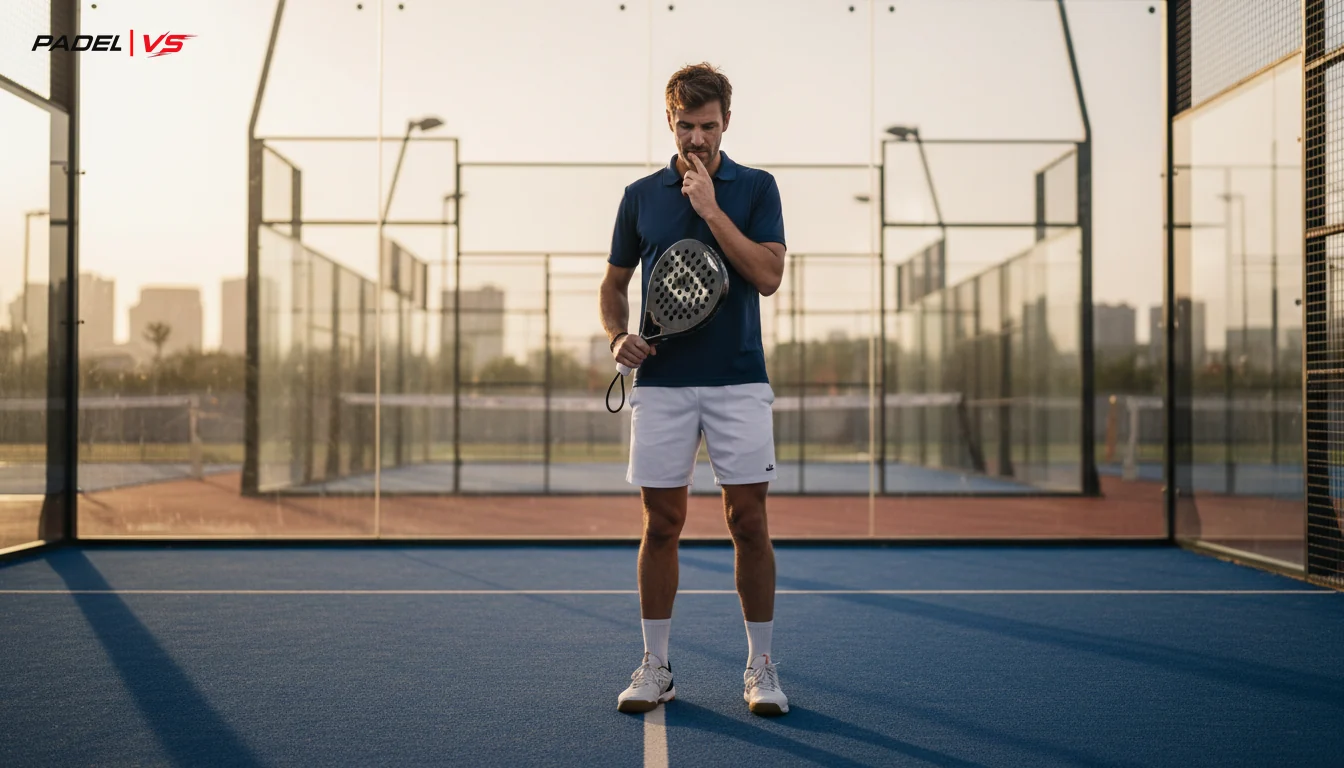

The padel ball is the most overlooked piece of equipment in the sport and, paradoxically, the one that affects point quality the most. Padel is played on a 10 × 20 meter enclosed court with glass walls and metal mesh — a setup that demands a ball with a very specific internal pressure and a felt surface that responds predictably after bouncing off completely different materials. In 2026, the market has grown enough that choosing correctly can mean the difference between a fluid, competitive session and a frustrating afternoon wondering why nothing feels right.
Why a padel ball is not just a smaller tennis ball
This is the most common misconception among new players: assuming a padel ball is some kind of tennis ball derivative. Technically, they differ across three critical dimensions:
- Diameter: A padel ball measures 6.35–6.77 cm, compared to 6.54–6.86 cm for tennis.
- Internal pressure: Between 4.6 and 5.2 kg/cm² per WPT/FIP regulations — deliberately lower than tennis to produce controlled bounces in enclosed spaces.
- Weight: Between 56 and 59.4 grams. A few grams make a noticeable tactile difference when the ball comes off the back glass.
The felt is also different: shorter and denser than tennis felt, engineered to withstand repeated glass impacts without shedding and to maintain its aerodynamic properties through multiple sets. A tennis ball on a padel court bounces too high, travels too fast, and makes the game essentially unplayable. This is not a minor detail — it is the core physics of the sport.
How balls lose pressure and when to replace them

Every pressurized ball starts losing air the moment it leaves the factory. At room temperature (around 20°C / 68°F), an unopened can loses approximately 0.1 kg/cm² per month of storage. Once opened and after 60–90 minutes of intense play, pressure can drop 15–20% from its original value.
"A dead ball doesn't lie — it tells you that you've been playing too long without replacing it. The problem is that we adapt to the bad bounce and stop noticing it altogether."
The practical rule for competitive matches: one new can per match. For practice sessions, a can can last 2–3 sessions of 90 minutes each under normal conditions. In high-humidity coastal environments like Cancún (75–90% relative humidity in summer), the felt absorbs moisture and the ball becomes noticeably heavier much faster — sometimes within a single session.
Clear signs that a ball has run its course:
- Low or unpredictable bounce when dropped from 2.5 meters (per FIP standard, it should reach 135–145 cm).
- Raised or fluffy felt — increases air drag and alters trajectory in ways that mess with your instincts.
- Visible deformation: if you squeeze the ball and it doesn't recover its shape within one second, toss it.
- Dull sound when bounced on the floor — an unmistakable sign of low internal pressure.
Best padel balls in 2026: technical comparison

The market now has access to virtually all leading European brands, plus some local options that have earned their reputation. Here is an honest breakdown of the most relevant choices this year:
| Ball | Pressure (kg/cm²) | Certification | Approx. price (can of 3) | Recommended level |
|---|---|---|---|---|
| Head Padel Pro S | 4.8 – 5.1 | WPT / FIP | $15–19 USD ($280–350 MXN aprox) | Tercera to Open |
| Wilson Padel Championship | 4.7 – 5.0 | FIP | $14–18 USD ($260–320 MXN aprox) | Cuarta to Primera |
| Bullpadel GB3 | 4.6 – 4.9 | FIP | $13–17 USD ($240–300 MXN aprox) | Quinta to Tercera |
| Dunlop Padel Tour | 4.9 – 5.2 | WPT | $17–21 USD ($300–370 MXN aprox) | Segunda to Open |
| Nox AT10 Competition | 4.7 – 5.0 | FIP | $14–17 USD ($250–310 MXN aprox) | Cuarta to Segunda |
Head Padel Pro S — the circuit reference
This has been the official ball of the World Padel Tour for several seasons and the one you'll see most often in organized tournaments. Its Extra Duty felt handles humidity well, and the 4.8–5.1 kg/cm² pressure range keeps it playable noticeably longer than most direct competitors. One caveat worth knowing: at altitudes above 1,500 meters (Mexico City sits at 2,240 m), any pressurized ball behaves differently — bounces higher, travels faster, harder to control. If you regularly play in high-altitude cities, consider altitude-adjusted or pressureless options, which we'll cover below.
Wilson Padel Championship — best price-to-performance balance
The most balanced option for players in the Cuarta to Primera range who train frequently. Its felt texture produces a consistent glass-wall response, which intermediate players genuinely appreciate — it reduces the surprises on glass volleys and helps build muscle memory for wall play. Widely available in Mexican specialty stores at $14–18 USD ($260–320 MXN aprox) per can.
Bullpadel GB3 — the smart training choice
Not the most glamorous option, but probably the best cost-per-hour value for practice sessions. The slightly lower pressure range (4.6–4.9 kg/cm²) gives Quinta and Cuarta players a fraction more reaction time — a real pedagogical advantage when you're still building your pattern recognition. Save the premium balls for tournaments; for your ten weekly training hours, the GB3 is hard to beat on value.
Dunlop Padel Tour — highest pressure for fast courts
At up to 5.2 kg/cm², this ball is built for medium-to-fast artificial grass surfaces. If your club has rough carpet courts where the ball naturally slows down, the Dunlop Tour compensates with authority. It's the go-to for Segunda and Primera players who want to maintain net-zone tempo and keep rallies from dragging on slow surfaces.
Official ball vs. practice ball: which should you buy?
In professional circuits the distinction is straightforward: FIP or WPT-certified official balls for competition, practice balls (usually cheaper, sometimes pressureless) for training. In amateur padel, the line is blurrier and frankly less enforced.
Our recommendation by category at PADEL VS:
- Quinta (<850 ELO): Practice or low-pressure ball. A slower ball reduces early frustration and extends rallies so you can actually learn the wall patterns.
- Cuarta (850–1000 ELO): Mid-range FIP ball. At this stage you need bounce consistency to develop your glass game.
- Tercera (1000–1180 ELO): Certified FIP or WPT ball. From here, bounce nuances tactically influence whether you move up to the net or stay back.
- Segunda to Open (1180+ ELO): Official ball only, fresh can per match. No excuse for a dead ball at this level.
Altitude, humidity, and temperature: Mexico's context matters
Mexico's climate diversity is extraordinary — and it directly affects how padel balls behave. Three key scenarios:
Cancún and Mérida (coastal, high humidity)
Relative humidity of 70–90% during rainy season. The felt absorbs moisture and the ball becomes heavy and slow faster than anywhere else. Recommendation: change balls every 75–80 minutes of actual play, store unopened cans in a cool, dry place, and prefer plastic-sealed tubes over classic metal cans when you can find them — they hold pressure better in coastal environments.
Mexico City (2,240 meters above sea level)
Atmospheric pressure in CDMX is approximately 0.78 atm versus 1.0 atm at sea level. A standard pressurized ball feels noticeably faster and "lighter" at altitude — bounces higher, shots harder to control, net players gain an extra advantage over baseline defenders. Altitude-specific balls exist in tennis (Penn High Altitude, Tretorn Micro-X) but the padel market for altitude-adjusted balls is still limited. The practical workaround: pressureless padel balls, which partially compensate for the altitude effect and maintain more consistent bounce throughout a long session.
Guadalajara and Monterrey (temperate to dry climate)
The most favorable conditions for standard padel balls. Guadalajara sits at 1,560 m, so there is a mild altitude effect, but far less pronounced than CDMX. A standard FIP ball works well with regular changes. Monterrey's dry heat can slightly accelerate felt wear in summer, but it's manageable with normal replacement cadence.
"In padel, the right ball for your climate and skill level isn't a luxury — it's part of your tactical setup. Playing a Tercera-level match with a dead ball is like showing up with the wrong racket strung at the wrong tension."
Where to buy padel balls in Mexico: real 2026 prices
The market has three main purchasing channels:
- Padel clubs directly: Most convenient but typically the most expensive. Expect to pay $18–23 USD ($320–420 MXN aprox) per can at the club, with the upside that balls are fresh and appropriate for the court surface.
- Specialized padel stores (physical and online): $13–19 USD ($240–350 MXN aprox) per can. Brands like Padel Nuestro, Sport Zone, and local specialty stores in CDMX, Guadalajara, and Cancún. Buying 4–6 cans at once reduces unit cost meaningfully.
- Amazon México and Mercado Libre: Wide range from $10–22 USD ($180–400 MXN aprox). Be careful with unknown brands lacking FIP certification — low price often means low-quality felt that deteriorates within 20 minutes of play.
Buying tip: purchase in 4-can packs or larger from certified brands. Volume savings are real (up to 15–20% vs. single-can price) and you'll always have fresh balls on hand without scrambling before a match.
PADEL VS tournaments: what ball we use
In tournaments organized through PADEL VS, we specify the official ball in each competition's rules — typically WPT or FIP-certified balls matched to the tournament's category level (from Quinta through Open). When you register for a tournament at app.padelvs.com / padelvs.com or through the Telegram Mini App at @padelvsbot, you'll always find the official match ball listed in the competition details.
It sounds like a small thing, but players at Tercera level and above genuinely appreciate it: knowing which ball you'll play with on match day lets you train with that same ball during the week and arrive calibrated. That's not overthinking — it's professional preparation applied to competitive amateur padel.
Summary: the right ball for every player profile
If you've scrolled to the bottom and want a direct answer:
- Just starting out (Quinta): Bullpadel GB3 or any FIP practice ball. Save your budget for the racket.
- Playing 3–4 times a week (Cuarta–Tercera): Wilson Padel Championship or Nox AT10. Change every 2 sessions.
- Competing in tournaments (Segunda–Open): Head Padel Pro S or Dunlop Padel Tour. Fresh can per match, no negotiation.
- Playing in Mexico City: Explore pressureless or altitude-adjusted balls — the tactical difference at 2,240 meters is real.
- Playing in Cancún or the coast: Buy fresh cans, store them properly, change them more often than you think you need to.
The ball is the most democratic piece of padel equipment: it doesn't cost what a carbon fiber racket costs, but its impact on every single point is equally real. Choosing it well is the easiest and most ignored equipment decision in the sport.